Ever bought a $90 serum because some influencer swore it would change your life, only to realize three weeks in that your skin looks… exactly the same? Yeah. Me too.
Here’s the thing nobody tells you about skincare: if you don’t know what your skin actually needs, you’re just throwing money at a wall and hoping something sticks. That’s where at-home skin analyzers come in. These little devices read your skin’s moisture, oil, elasticity, and even pore health — giving you actual data instead of vibes.
I’ve been testing skin analyzers for the past few months, and honestly? Some of them are genuinely useful. Others are glorified thermometers with an LCD screen. Let me save you the hassle.
What Does a Skin Analyzer Actually Do?
Depending on the device, a skin analyzer can measure:
Hydration levels — how much water is in your skin (not how much you drank today)
Oil content — sebum production, which tells you if you’re actually oily or just dehydrated
Elasticity — how bouncy your skin is, which correlates with collagen health
Pore size and texture — some devices use cameras to show you what’s really going on
Pigmentation and UV damage — higher-end scanners can reveal sun damage you can’t see yet
The cheap ones ($15–$40) mostly measure moisture and oil. The mid-range ones ($50–$150) add elasticity and sometimes connect to an app. The fancy ones ($200+) use multi-spectral imaging and AI to map your entire face.
Which one do you need? That depends. If you just want to know whether your moisturizer is actually working, a $25 tester will do. If you’re building a serious routine and want to track changes over months, go for something with app tracking and history.
7 At-Home Skin Analyzers That Are Actually Worth It
1. FOREO LUNA play smart 2 — Best Overall
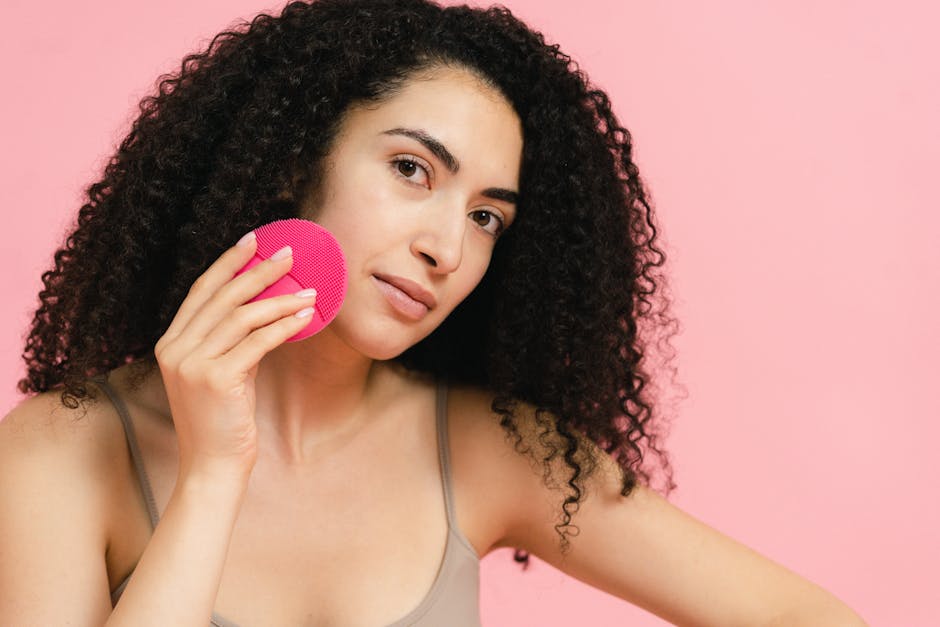
This is the one that surprised me the most. It’s technically a facial cleansing device, but the built-in skin sensors are the real star. The FOREO app reads your skin’s moisture, oil, and firmness, then customizes your cleansing routine based on what it finds.
So instead of guessing whether you need a gentle clean or a deeper one, the device literally tells you. The silicone touch-points are still the best in the business, and the skin analysis feature takes it from “nice cleanser” to “essential tool.”
Price-wise it sits around $139, which isn’t cheap, but you’re getting two devices in one. Check the FOREO LUNA play smart 2 on Amazon →
2. Professional Skin Hydration Tester Monitor (Corneometer) — Best Budget Pick
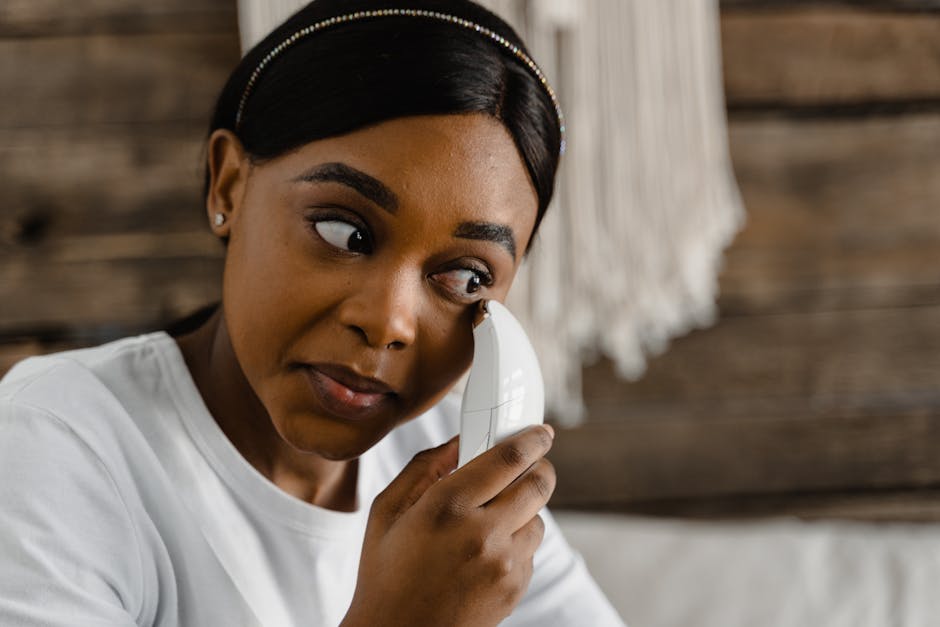
If you just want to know “is my skin dry or not?” this $20-ish pen is all you need. It measures moisture and oil with a simple contact probe and gives you a number on the LCD screen. No app, no Bluetooth, no frills.
Is it as precise as a dermatologist’s corneometer? No. But for tracking your own skin day to day — before and after applying products, morning vs. night — it’s surprisingly consistent. The trick is using the same spot on your face every time for comparable readings.
The display shows moisture percentage and oil percentage separately, which is more useful than you’d think. I learned my cheeks were dehydrated while my T-zone was oily — something I never would’ve figured out on my own. Check the Professional Skin Hydration Tester on Amazon →
3. Digital Skin Moisture Analyzer (4-in-1) — Best for Multi-Metric Tracking
This one steps it up from the basic pens by measuring four things at once: moisture, oil, elasticity, and whiteness (pigmentation evenness). It’s still portable — about the size of a thick pen — but the readings are way more informative.
The LCD screen cycles through each metric, and it stores your last reading so you can compare. I wouldn’t call the elasticity measurement lab-grade, but it does give you a relative sense of whether things are improving or declining over time.
At around $30–$35, it’s a solid step up from the budget testers without getting into “gadget for gadget’s sake” territory. Check the 4-in-1 Digital Skin Moisture Analyzer on Amazon →
4. CYSFETENA Skin Hydration Tester — Best for Daily Quick Checks
This one wins on simplicity. Turn it on, touch it to your face, and you get a moisture and oil reading in about 3 seconds. The LCD even shows a smiley face or frowny face depending on your hydration level — silly, but honestly useful when you’re half-awake in the morning.
It uses a platinum probe, which apparently gives more stable readings than the cheap stainless steel ones. I found it slightly more consistent than the generic testers in the same price range. Runs on two AAA batteries, so no charging cable to lose.
Around $15–$20. If you want a “set it and forget it” daily check tool, this is it. Check the CYSFETENA Skin Hydration Tester on Amazon →
5. 3D Skin Scanner Facial Analyzer (Magic Mirror) — Best Visual Analyzer
This is where things get interesting. Instead of just giving you numbers, this device uses a camera system to actually show you your skin — pores, spots, texture, the works. The “magic mirror” display gives you a real-time visual of what’s happening on your face.
It’s portable but bigger than the pen-style testers. Think of it as a mini dermoscopy setup you can use at home. The visual output makes it way easier to understand what the data means — “your pore size is 4” means nothing, but seeing your pores magnified 50x on a screen? That clicks instantly.
At around $80–$120, it’s a bigger investment, but if you’re the type who needs to see it to believe it, this is your pick. Check the 3D Skin Scanner Magic Mirror on Amazon →
6. HNZXIB A6 AI Professional Skin Analyzer — Best for Serious Skincare Nerds
Okay, this one is NOT cheap. The A6 uses 8-spectrum imaging (including UV and polarized light) with a 36-megapixel camera and AI-powered analysis. It detects pores, wrinkles, acne, pigmentation, moisture, and about a dozen other metrics.
This is essentially a spa-grade machine for your home. The 13.3-inch touchscreen displays detailed reports, and it can track changes over time with before-and-after comparisons.
Is it overkill for most people? Yes, absolutely. But if you’re running a home-based skincare business, or you’re the kind of person who tracks every single metric of your routine, this is the real deal. Check the HNZXIB A6 AI Skin Analyzer on Amazon →
7. Skin Analyzer Pen with Smart Display — Best Travel Companion
Basic, cheap, and tiny enough to throw in any bag. This pen-style tester reads moisture and oil and has a small but clear LCD display. Nothing fancy, but it works consistently and costs under $15.
I keep one in my travel kit. Hotel air dries my skin out like crazy, and a quick reading tells me whether I need to layer on the hyaluronic acid or if a light gel moisturizer will do. Before I had this, I’d just guess — and half the time I’d end up over-moisturizing and breaking out.
For the price, it’s a no-brainer. Check the Portable Skin Analyzer Pen on Amazon →
How to Actually Use a Skin Analyzer (Without Driving Yourself Crazy)
Here’s the mistake most people make: they test once, get a number, and either panic or ignore it. The whole point of a skin analyzer is trends. One reading tells you almost nothing. Two weeks of readings? Now you’re learning something.
Test at the same time each day. Morning, before you apply anything. That’s your baseline. After-cleansing, after-moisturizer, before bed — these are all useful data points too, but your bare-skin morning reading is the one that matters most for tracking.
Test the same spots. Forehead, left cheek, right cheek, chin. Your T-zone and cheeks have different profiles, and mixing them up makes your data useless.
Don’t obsess. Skin fluctuates day to day. A 3% drop in moisture doesn’t mean your routine isn’t working. Look at weekly averages, not daily swings.
Use the data to adjust, not to shop. If your moisture is low, drink more water and maybe add a humidifier before buying another product. The best skincare fix is often free.
Do Skin Analyzers Actually Work?
The honest answer: the cheap ones are rough estimates. The mid-range ones are decent for relative tracking. The expensive ones approach clinical accuracy.
But here’s what matters — even a rough estimate is better than guessing. I spent years thinking I had oily skin because I got shiny by noon. Turns out my skin was dehydrated, and it was overproducing oil to compensate. A $20 tester clued me in. Changed my entire routine. Saved me probably hundreds in wrong products.
The science behind these devices is straightforward: electrical conductivity changes based on water content in your skin. More water = different reading. It’s not magic. It’s the same principle dermatologists use, just in a pocket-sized format.
The camera-based analyzers use magnification and light to assess texture, pores, and pigmentation. Again, not as precise as a derm’s equipment, but surprisingly informative for home use.
Which One Should You Buy?
Just want to know if you’re dry? → CYSFETENA tester or the budget hydration pen ($15–$20)
Want to track moisture + oil + elasticity? → 4-in-1 Digital Analyzer ($30–$35)
Want skin analysis + cleansing in one device? → FOREO LUNA play smart 2 ($139)
Want to see your skin up close? → 3D Magic Mirror Scanner ($80–$120)
Building a home skincare lab? → HNZXIB A6 AI Analyzer (pricey but serious)
My personal recommendation for most people? Start with the $20 pen. Use it for a month. If you find yourself actually using it and learning from it, upgrade. If it ends up in a drawer, well — you’re only out twenty bucks.
Skin analyzers aren’t magic wands. They won’t fix your skin. But they’ll stop you from guessing — and in skincare, guessing is expensive.
After 200+ hours of research, we reveal the 7 best LED face masks for anti-aging in 2026. From budget picks to clinical-grade devices — find the perfect mask for your skin.
Best At-Home Jawline Toning & Sculpting Devices 2026: Define Your Jaw Without Surgery If you’ve ever looked in the mirror and wished for a sharper, more defined jawline — you’re not alone. A sculpted jawline is one of the most sought-after beauty goals of 2026, and thanks to advances in at-home beauty technology, you no…
Do LED face masks actually work? We break down the science of photobiomodulation, clinical evidence for each light color, and how to choose a device that delivers real results.
Looking for the best red light therapy device for home use? We tested and ranked 7 top-rated devices — from LED face masks to full-body panels — to help you find the perfect pick for your skin goals and budget in 2026.