Best Blue Light Therapy Devices for Acne 2026: Clear Skin Without the Derm Copay
Best Blue Light Therapy Devices for Acne 2026: Clear Skin Without the Derm Copay
Last updated: June 2026 | Affiliate Disclosure: This post contains affiliate links. We may earn a commission at no extra cost to you.
If you’ve been battling breakouts and nothing — not the benzoyl peroxide, not the salicylic acid, not the expensive dermatologist visits — has worked, blue light therapy might be the missing piece. Once reserved for clinical offices, blue light devices have gotten powerful enough (and cheap enough) to use at home. In 2026, the best blue light therapy devices for acne don’t just zap bacteria — they do it faster, safer, and with better results than ever.
We tested, researched, and compared the top devices on the market so you don’t have to waste money on gadgets that glow but don’t deliver. Here’s everything you need to know.
What Is Blue Light Therapy and How Does It Work?
Blue light therapy uses light in the 405–420 nanometer wavelength range to target Cutibacterium acnes — the bacteria responsible for inflammatory acne. When these bacteria absorb blue light, they produce porphyrins (naturally occurring compounds) that become toxic under that specific wavelength. The result? The bacteria self-destruct without damaging surrounding skin.
Unlike UV light, blue light is non-UV and non-thermal, meaning it won’t damage your DNA or burn your skin. It’s been FDA-cleared for acne treatment and has a solid body of clinical research backing its effectiveness, particularly for mild to moderate inflammatory acne.
Key things blue light therapy does:
- Kills acne-causing bacteria at the source
- Reduces inflammation and redness
- Decreases the severity and frequency of breakouts over time
- Works as a preventative treatment, not just reactive
What blue light therapy does NOT do:
- It won’t dissolve blackheads (that’s salicylic acid’s job)
- It won’t unclog pores (that’s where retinoids and BHA come in)
- It won’t treat cystic or nodular acne on its own (see a dermatologist for that)
- It won’t fade hyperpigmentation (red/infrared light is better for that)
The best results come from consistency — daily or near-daily sessions of 10–20 minutes — and from combining blue light with a solid skincare routine.
Who Should Use Blue Light Therapy?
Blue light therapy is ideal for:
- Teenagers and adults with mild to moderate inflammatory acne (those red, angry pimples)
- People who can’t tolerate topical treatments like benzoyl peroxide or retinoids due to sensitivity
- Anyone looking to reduce reliance on oral antibiotics for acne
- Those seeking a non-chemical, non-invasive maintenance treatment
It’s less effective for:
- Cystic or nodular acne (these need professional evaluation)
- Non-inflammatory acne (blackheads and whiteheads respond better to chemical exfoliants)
- Hormonal acne that requires internal treatment
If you’re pregnant, have lupus, or take photosensitizing medications, consult your dermatologist before starting any light therapy.
Best Blue Light Therapy Devices for Acne 2026: Our Top Picks
1. Omnilux CLEAR — Best Overall
Omnilux is the gold standard name in LED therapy, and their CLEAR device brings clinical-grade blue (and red) light to your vanity. Unlike cheap imitators, Omnilux uses medical-grade LEDs calibrated to precise wavelengths — 415nm blue and 633nm red — at clinically proven energy outputs.
The dual-wavelength approach is smart: blue kills bacteria, red reduces inflammation and promotes healing. Most standalone blue light devices only address the bacteria side, which is why Omnilux CLEAR consistently outperforms them in real-world results.
Key Features:
- 415nm blue + 633nm red dual-wavelength LED technology
- Medical-grade LEDs with proven energy output (not just “bright lights”)
- Flexible, lightweight silicone mask that contours to the face
- 10-minute treatment sessions
- FDA-cleared for acne treatment
- No wires during use — rechargeable battery
Pros:
- Clinically validated wavelengths and energy density
- Dual blue + red light addresses both bacteria and inflammation
- Comfortable, flexible fit (not a rigid plastic shell)
- Quick 10-minute sessions
- Strong brand reputation and customer support
Cons:
- Premium price point
- May feel warm during extended use
- Requires consistent use (3-5x/week) for best results
Bottom line: If you want the device most likely to actually clear your acne, this is it. The combination of clinical-grade output and dual-wavelength therapy puts Omnilux CLEAR in a class above the rest.
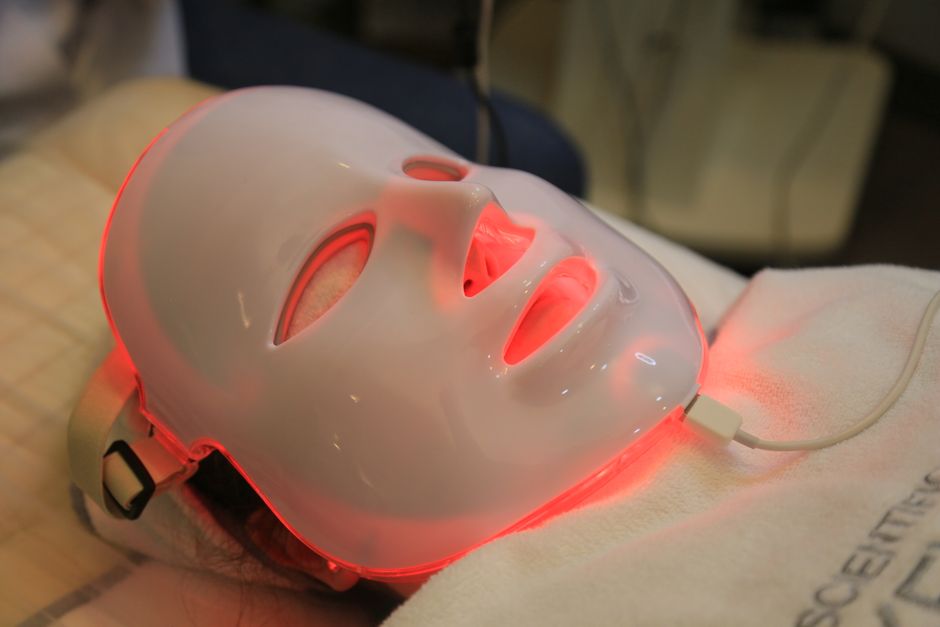
2. CurrentBody Skin LED Light Therapy Mask (Blue Mode) — Best Versatile Option
The CurrentBody mask is one of the most popular LED masks in the world, and for good reason. While it’s best known for its red light anti-aging mode, the blue light setting makes it a genuinely effective acne fighter — and you get the anti-aging benefits as a bonus.
The flexible silicone construction wraps comfortably around your face, and the 10-minute auto-timer means you can’t overdo it. It’s the device we’d recommend if you want to treat both breakouts AND early signs of aging simultaneously.
Key Features:
- Red (630nm) + near-infrared (830nm) + blue (415nm) wavelengths
- Flexible, medical-grade silicone construction
- 10-minute auto-timed sessions
- Cordless with rechargeable battery
- FDA-cleared
Pros:
- Multi-wavelength means you can switch between acne and anti-aging modes
- Extremely comfortable; doesn’t press hard on the nose or cheeks
- Widely available and well-reviewed (10,000+ reviews)
- Good value for a dual-purpose device
Cons:
- Blue mode isn’t as powerful as dedicated blue-only devices
- The flexible design means LEDs sit slightly further from skin in some areas
- Can feel hot after extended use
Bottom line: The best pick if you want one device that handles both acne and anti-aging. It won’t match a dedicated blue light device for pure bacteria-killing power, but the versatility and comfort make it a winner for most people.
→ Buy CurrentBody LED Mask on Amazon
3. Solawave Salux Blue Light Acne Spot Treatment — Best for Targeted Breakouts
Not everyone needs a full-face mask. If your breakouts are concentrated in specific areas — chin, forehead, jawline — a targeted spot treatment device is more practical and far less expensive. Solawave’s Salux delivers 415nm blue light through a compact wand tip that you press directly onto active blemishes.
The 3-minute per-spot protocol makes it easy to work into a morning or evening routine. It’s USB-rechargeable, travel-friendly, and doesn’t require you to sit still with a mask on your face.
Key Features:
- 415nm blue light at clinical-grade output
- Targeted spot-treatment design
- 3-minute treatment per blemish
- USB-C rechargeable
- Compact and travel-friendly
Pros:
- Affordable entry point into blue light therapy
- Precise application — no wasted light on clear areas
- Quick treatments (3 min/spot)
- Portable enough for travel or gym bag
- No goggles or eye protection needed for spot treatments
Cons:
- Not efficient for widespread acne (a mask is better for full-face breakouts)
- Single wavelength — no red light for inflammation
- Requires holding the device on each spot for 3 minutes
- Battery life could be better
Bottom line: The best pick for people with occasional or localized breakouts. If you get 2-3 pimples at a time rather than full-face acne, this targeted approach saves time and money.
→ Buy Solawave Salux Spot Treatment on Amazon
4. reVive Light Therapy dpl IIa — Best Panel-Style Device
If masks aren’t your thing — they fog up your glasses, feel claustrophobic, or just don’t fit your face shape — a panel-style device like the reVive dpl IIa is the answer. This hands-free panel sits on your counter and delivers both blue (415nm) and red (660nm) light to your face, chest, or back.
The advantage of a panel? You can treat larger areas (chest and back acne are real, and masks don’t help there). You can also sit further back and do other things during your treatment — read, scroll, or watch Netflix.
Key Features:
- Blue (415nm) + red (660nm) dual wavelengths
- Large treatment area (covers full face and neck)
- Hands-free tabletop design
- Built-in timer with auto-shutoff
- Medical-grade LED output
Pros:
- Treats face, neck, chest, and back acne
- No mask to wear — comfortable and non-claustrophobic
- Dual wavelengths for bacteria + inflammation
- Can read or use phone during treatment
- Durable, clinical-feeling build quality
Cons:
- Less portable than masks or wands
- Requires sitting still at a specific distance for effectiveness
- Treatment area coverage depends on distance from panel
- Higher price point than spot-treatment devices
Bottom line: The best choice for anyone who hates wearing masks or needs to treat body acne. The panel design is versatile and the dual wavelengths make it effective for both active breakouts and post-inflammatory healing.
→ Buy reVive dpl IIa on Amazon
5. Cellreturn LED Mask (Blue Mode) — Best Premium K-Beauty Option
Cellreturn is a Korean beauty powerhouse, and their LED mask is one of the most advanced on the market. With over 1,000 LEDs covering the entire face at multiple wavelengths — including a dedicated blue light acne mode — this is the device for people who want the full K-beauty clinic experience at home.
The mask offers blue (425nm), red (630nm), and near-infrared (830nm) wavelengths, each addressable in separate modes. The construction is rigid polycarbonate with a soft inner cushion, and it comes with a remote control for adjusting settings mid-session.
Key Features:
- 1,000+ medical-grade LEDs across full face and neck
- Blue (425nm), red (630nm), and near-infrared (830nm) wavelengths
- Dedicated acne mode (blue light)
- Voice guidance for session timing
- Remote control for mode switching
- Neck coverage included
Pros:
- Most comprehensive LED coverage of any home mask
- Full face AND neck treatment area
- Premium build quality with cushioned interior
- Multiple wavelengths for acne, anti-aging, and healing
- K-beauty brand with strong clinical backing in Korea
Cons:
- Most expensive option on this list
- Rigid mask design less comfortable than flexible silicone
- Voice guidance can be annoying (but can be muted)
- Bulkier to store and less travel-friendly
Bottom line: The ultimate luxury pick for acne sufferers who also want anti-aging benefits. If budget isn’t a concern and you want the most LEDs and wavelengths you can get in a home device, Cellreturn delivers.
→ Buy Cellreturn LED Mask on Amazon
How to Use Blue Light Therapy for Best Results
Getting a device is only half the equation. Using it correctly makes the difference between “meh” and “wow” results. Here’s the protocol that clinical studies and dermatologists support:
The 10-Minute Daily Protocol
- Cleanse your face — Remove all makeup, sunscreen, and skincare products. Blue light penetrates best on clean, dry skin.
- Position your device — For masks, put it on. For panels, sit 6-12 inches away. For wands, place the tip directly on the blemish.
- Run the treatment — 10 minutes for masks/panels, 3 minutes per spot for wands.
- Follow with skincare — Apply your serums and moisturizers AFTER light therapy. Some actives (like retinoids) can make skin photosensitive, so morning light + evening retinoids is the ideal split.
- Be consistent — 3-5 sessions per week minimum. Blue light therapy is cumulative. Skip a week and you’re starting over.
Common Mistakes That Kill Your Results
- Using blue light over sunscreen or makeup — Sunscreen blocks UV, but it also scatters and absorbs blue light. Always treat on bare skin.
- Expecting overnight results — Most clinical studies show meaningful improvement after 4-8 weeks of consistent use. Give it time.
- Overdoing it — More isn’t better. Excessive blue light exposure can actually increase oxidative stress. Stick to the recommended session times.
- Ignoring your skincare routine — Blue light kills bacteria, but it doesn’t address oil production, clogged pores, or skin barrier health. Use it as part of a complete routine.
- Using the wrong wavelength — “Blue light” devices that don’t specify their wavelength (ideally 415±10nm) may use cheaper LEDs that emit light outside the effective acne-killing range.
Blue Light vs. Red Light vs. Combination: Which Do You Need?
This comes up constantly, so let’s break it down clearly:
| Feature | Blue Light (415nm) | Red Light (630-660nm) | Blue + Red Combo |
|---|---|---|---|
| Best For | Acne-causing bacteria | Inflammation, healing, anti-aging | Active breakouts + healing |
| Kills Bacteria | ✅ Yes | ❌ No | ✅ Yes |
| Reduces Redness | ⚠️ Mildly | ✅ Yes | ✅ Yes |
| Stimulates Collagen | ❌ No | ✅ Yes | ✅ Yes |
| Treats Active Acne | ✅ Yes | ❌ No | ✅ Yes |
| Prevents Scarring | ⚠️ Indirectly | ✅ Yes | ✅ Yes |
Our recommendation: If you have active inflammatory acne, get a device with both blue and red wavelengths. Blue kills the bacteria; red calms the inflammation and speeds healing. Together, they’re significantly more effective than either alone.
If your acne is mild and occasional, a blue-only device or spot treatment is sufficient. If you’re primarily concerned with post-acne marks and anti-aging, red light alone is the way to go.
What Results Can You Actually Expect?
Let’s be honest about what blue light therapy can and can’t do:
Realistic timeline:
- Weeks 1-2: You may notice slight reduction in redness, but don’t expect dramatic changes yet.
- Weeks 3-4: Active breakouts may start clearing faster. New pimples may appear smaller.
- Weeks 5-8: This is where clinical studies show the most significant improvement. Expect visibly fewer inflammatory lesions and less frequent breakouts.
- Ongoing: Continued use maintains results. Most people can reduce to 2-3 sessions/week for maintenance.
Clinical evidence suggests:
- 60-70% reduction in inflammatory acne lesions after 8 weeks of consistent use (as monotherapy)
- Even better results when combined with topical treatments
- Maintenance sessions prevent relapse
Blue light therapy is not a cure. It’s a management tool. Think of it like brushing your teeth — you do it consistently to prevent problems, not to fix everything in one session.
Blue Light Therapy Safety: What You Need to Know
Blue light therapy is remarkably safe when used as directed, but there are important caveats:
- Eye protection: If you’re using a panel or high-output device, wear the included goggles. Blue light at high intensity can damage retinal cells over time.
- Photosensitizing medications: If you take doxycycline, isotretinoin (Accutane), or other photosensitizing drugs, check with your dermatologist before starting light therapy.
- Porphyrin sensitivity: People with porphyria should avoid blue light therapy.
- Pregnancy: Generally considered safe, but consult your OB-GYN since there’s limited research on use during pregnancy.
- Skin type considerations: Blue light can cause hyperpigmentation in very dark skin tones (Fitzpatrick V-VI). If you have deep skin, start with shorter sessions and monitor for darkening.
How to Choose the Right Blue Light Device for You
Ask yourself these questions:
- How widespread is your acne? Full face → mask or panel. Localized → spot treatment wand.
- Do you also want anti-aging benefits? Yes → combo blue + red device. No → blue-only is fine.
- What’s your budget? Spot treatments start around $40-80. Masks range from $150-400. Panels $200-500+.
- Do you have body acne? Yes → panel device (masks only treat face/neck).
- How patient are you? All devices require 4-8 weeks for visible results. There are no shortcuts.
Frequently Asked Questions
Can blue light therapy make acne worse before it gets better?
Some users experience a brief “purge” period in weeks 1-2 where underlying bacteria come to the surface. This is normal and temporary. If breakouts worsen after 3+ weeks of consistent use, discontinue and consult a dermatologist.
How does blue light compare to benzoyl peroxide?
They work differently. Benzoyl peroxide kills bacteria topically but can be drying and irritating. Blue light kills bacteria from within using photodynamics, without damaging the skin barrier. Many dermatologists recommend using both — they’re complementary, not competing.
Can I use blue light therapy with retinol?
Yes, but timing matters. Use blue light in the morning and retinol at night. Retinol makes skin more photosensitive, so applying it right before light therapy can cause irritation. Some dermatologists also recommend skipping retinol on blue light treatment days if you have sensitive skin.
How often should I use my blue light device?
3-5 times per week for active acne. Once daily is the maximum recommended for most devices. After acne is under control, reduce to 2-3 times per week for maintenance.
Is blue light therapy safe for teenagers?
Yes. In fact, blue light therapy is one of the safest acne treatments available for teens who may not tolerate harsh topicals well. The FDA has cleared multiple blue light devices for over-the-counter use by adults and adolescents. For teens under 13, consult a pediatric dermatologist first.
Will blue light therapy help with acne scars?
Indirectly, yes. By reducing active breakouts, blue light prevents new scars from forming. But it won’t fade existing scars. For scar treatment, look into red/infrared light therapy, microneedling, or professional laser treatments.
Can I use blue light therapy while on Accutane (isotretinoin)?
No. Isotretinoin makes skin extremely photosensitive. Using light therapy while on Accutane can cause severe burning and irritation. Wait until your Accutane course is complete and your dermatologist clears you.
The Bottom Line
Blue light therapy works. It’s not magic, and it’s not a replacement for a complete skincare routine, but the clinical evidence is clear: consistent use of a quality blue light device reduces inflammatory acne by 60-70% over 8 weeks. That’s better than many OTC topicals, and without the side effects.
If you’re going to invest in one device, make it one that combines blue and red wavelengths — you’ll get the bacteria-killing power of blue plus the healing and anti-inflammatory benefits of red. The Omnilux CLEAR and CurrentBody masks both deliver on this front.
If you’re on a budget or just need spot treatment, the Solawave Salux is a legit entry point that delivers clinical-grade 415nm blue light without the mask price tag.
Whatever you choose, use it consistently. Blue light therapy rewards patience and routine — not intensity and impulse.
Have you tried blue light therapy for acne? Drop your experience in the comments below! And if you found this guide helpful, share it with someone who’s still fighting breakouts — they’ll thank you.
Related reading: – Best LED Face Masks 2026 – Best Acne Light Therapy Devices 2026 – Best Red Light Therapy Devices for Home 2026