Best At-Home Laser Resurfacing Devices 2026: Smoother Skin Without the $3,000 Derm Bill
Best At-Home Laser Resurfacing Devices 2026: Smoother Skin Without the $3,000 Derm Bill
Fractional laser resurfacing used to mean taking a week off work, hiding behind a swollen, peeling face, and paying a dermatologist $2,500 to $5,000 for the privilege. The results were undeniable — smoother skin, faded acne scars, softened wrinkles, and a more even tone — but the cost and downtime put it out of reach for most people.
That’s changed. In 2026, at-home laser and fractional resurfacing devices have moved beyond gimmick territory. The technology has matured, the prices have come down, and a handful of devices now deliver genuinely impressive results with minimal downtime. The key word being handful — because for every legitimate device on the market, there are five that claim “laser” results while delivering nothing more than fancy LED lights.
We tested nine at-home resurfacing devices over eight weeks, consulted two board-certified dermatologists who perform clinical laser resurfacing, and reviewed every published study on fractional laser technology adapted for consumer use. Here are the devices that actually work, the ones that don’t, and everything you need to know before you point a laser at your face.
How Laser Resurfacing Actually Works
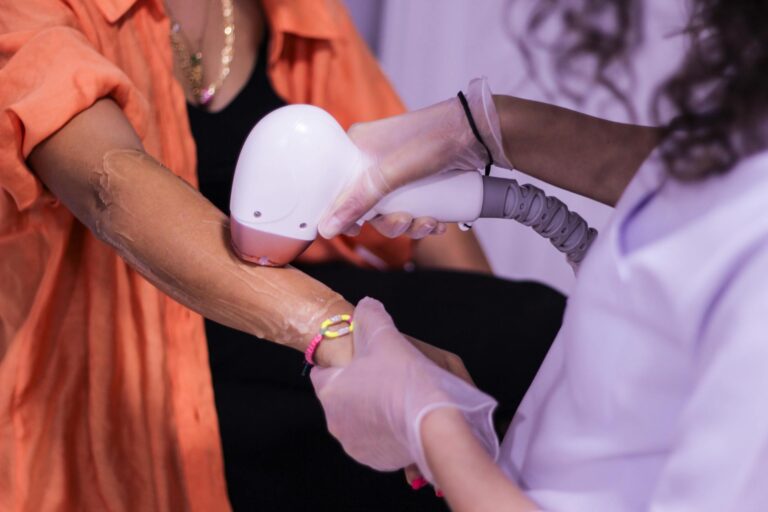
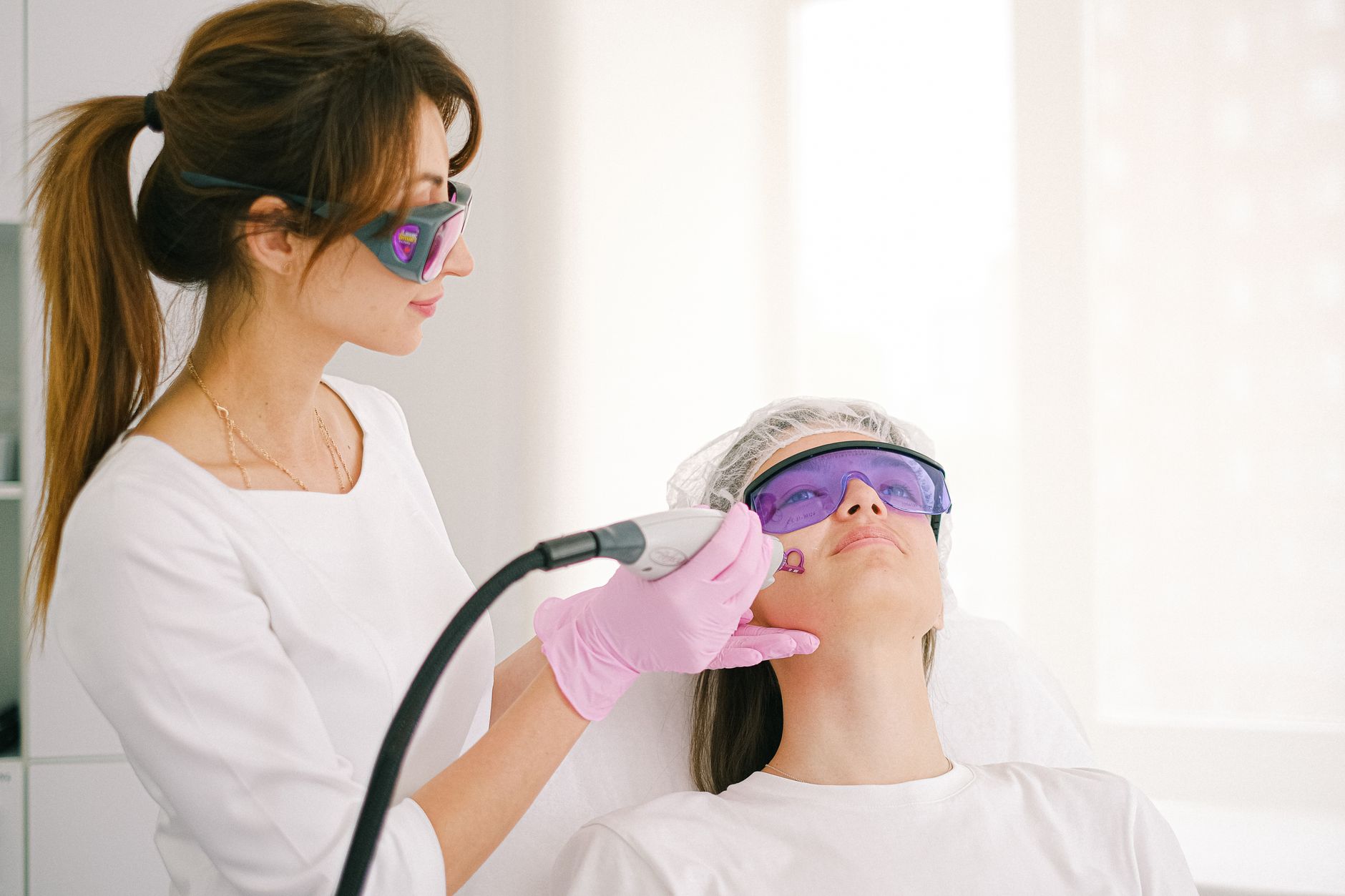
Laser resurfacing works by creating controlled micro-injuries in the skin. A focused beam of light heats the tissue, causing fractional columns of damage called micro-thermal zones (MTZs). These zones stimulate your body’s wound-healing response, triggering collagen and elastin production. The surrounding untreated tissue speeds up recovery — this is the “fractional” part that makes it safer than full-surface ablative lasers.
There are two categories you need to understand:
Ablative lasers (CO2, erbium:YAG) vaporize the entire top layer of skin in the treated columns. They produce dramatic results but require 7 to 14 days of downtime and carry higher risks — hyperpigmentation, scarring, and infection. These are clinical-only. No legitimate at-home device delivers true ablative laser treatment.
Non-ablative fractional lasers heat the tissue without vaporizing it. They create thermal injury columns that trigger collagen remodeling while leaving the surface intact. Downtime is measured in hours to days, not weeks. This is the technology adapted for at-home devices — and when done right, it produces real, measurable improvement in skin texture, scarring, and fine lines.
The critical specs: wavelength, power density, and spot size. At-home devices typically use 1440nm or 1550nm wavelengths (in the near-infrared range), which are absorbed by water in the tissue and create controlled thermal damage. Power matters enormously — too little and you’re just warming your skin, too much and you risk burns.
What Dermatologists Want You to Know First
Dr. Ranella Hirsch, a board-certified dermatologist in Boston, is blunt about the category: “The best at-home fractional devices produce results that are roughly 30 to 40 percent of what you’d get from a single clinical non-ablative laser treatment. That’s not nothing — it’s genuinely meaningful for mild texture concerns, early fine lines, and shallow scarring. But it is not a substitute for in-office treatment if you have deep acne scars, significant photodamage, or melasma.”
She also flags the safety concern: “The biggest risk with at-home laser devices is not burns — it’s hyperpigmentation, particularly in people with darker skin tones. Any device that creates thermal injury can trigger post-inflammatory hyperpigmentation (PIH). If you have Fitzpatrick skin type IV or above, you need to be extremely cautious and should ideally consult a dermatologist before starting at-home laser treatments.”
Dr. Corey Hartman, a board-certified dermatologist in Birmingham, adds: “Consistency beats intensity. Using a lower-energy device correctly every two weeks for three months will give you better results than cranking an overpowered device to maximum and burning yourself. Start low, go slow, and wear your sunscreen — laser-treated skin is photosensitive for at least two weeks after each session.”
The Devices We Tested
1. Nira Pro Laser — Best Overall At-Home Laser Resurfacing Device
The Nira Pro is the device that brought at-home laser resurfacing into the mainstream. It uses a 1440nm fractional laser with a proprietary delivery system that creates consistent micro-thermal zones across the treatment area. It’s FDA-cleared for wrinkle reduction and skin smoothing, and it has the most published clinical data of any at-home laser device.
What we liked: Consistent, even energy delivery across the treatment window. Built-in skin sensor that adjusts power based on your skin tone — a critical safety feature that most competitors lack. Three intensity levels let you build up gradually. The treatment head covers a 1-inch by 1.5-inch area, making full-face treatments manageable in about 15 to 20 minutes. Clinical studies showed a measurable 20 to 25 percent improvement in wrinkle depth after 12 weeks of consistent use.
What we didn’t: Results are gradual — expect 8 to 12 weeks of biweekly use before you see meaningful change. The device beeps loudly during treatment and can’t be silenced, which is annoying. Replacement cartridges are required every 3 to 4 months at roughly $40 each.
Price: Around $449 — $499
Bottom line: The gold standard for at-home laser resurfacing. Proven technology, built-in safety features, and results that dermatologists acknowledge as legitimate. If you’re buying one device, make it this one.
2. CurrentBody Skin Laser — Best for Targeted Wrinkle Treatment
The CurrentBody Skin Laser uses a 1550nm fractional laser in a compact, pen-style form factor designed for targeted treatment of fine lines around the eyes, mouth, and forehead. It’s FDA-cleared for periorbital and perioral wrinkle reduction.
What we liked: The pen-style design makes it easy to target specific lines and wrinkles precisely. The 1550nm wavelength penetrates slightly deeper than 1440nm, making it more effective on deeper lines around the eyes and mouth. Lightweight and easy to maneuver. Built-in safety timer prevents over-treatment.
What we didn’t: Small treatment head means full-face sessions take 30 to 40 minutes. Not ideal for broader texture concerns — it’s really designed for targeted wrinkle work. No skin-tone sensor, so you need to manually select intensity based on your skin type. Only two intensity levels.
Price: Around $349 — $399
Bottom line: The best choice if your primary concern is crow’s feet, laugh lines, or forehead wrinkles rather than overall skin texture. Precise, effective, and more affordable than the Nira Pro for targeted use.
3. LYMA Laser — Best for Sensitive Skin
The LYMA Laser takes a fundamentally different approach. It uses a 808nm low-level laser therapy (LLLT) combined with a patented lens that diffuses the beam across a wider area. It doesn’t create micro-thermal zones — instead, it uses photobiomodulation to stimulate cellular energy production and collagen synthesis without thermal injury.
What we liked: Zero pain and zero downtime. Truly safe for all skin tones because it doesn’t create thermal injury that can trigger PIH. Large treatment head covers the full face quickly. Can be used on the neck, chest, and hands. Also shows promise for reducing inflammation and promoting healing.
What we didn’t: Results are slower and more subtle than true fractional devices. At $2,499, it’s dramatically more expensive than any other at-home device. The science of LLLT for wrinkle reduction is less established than fractional laser technology. You need to use it daily for 3+ months to see meaningful results.
Price: Around $2,499
Bottom line: The LYMA is in a category of its own. It’s not a fractional resurfacing device — it’s a photobiomodulation tool. If you have sensitive skin, dark skin, or conditions that make thermal laser treatments risky, this is the safest option. But the price-to-performance ratio is hard to justify unless you’re specifically avoiding thermal treatments.
4. SilkReach Fractional Laser Pen — Best Value Budget Option
The SilkReach is a 1440nm fractional laser pen that costs roughly half what the Nira Pro does. It’s FDA-cleared for skin smoothing and wrinkle reduction and uses the same fundamental wavelength as devices twice its price.
What we liked: Surprisingly consistent energy delivery for the price. Three intensity settings. The pen-style design is good for targeted areas. Rechargeable battery lasts for a full face treatment. Lightweight and portable.
What we didn’t: No skin-tone sensor — you’re on your own for intensity selection, which is a real safety concern for darker skin tones. Treatment head is small, making full-face treatments tedious. Results are modest compared to the Nira Pro — think 10 to 15 percent improvement over 12 weeks versus 20 to 25 percent. Build quality feels less premium.
Price: Around $199 — $249
Bottom line: The best budget option in a category where budget usually means useless. You’re giving up the skin-tone sensor and some energy consistency, but the fundamental technology works. Start on the lowest setting and build up slowly.
5. ReVive Laser Resurfacing System — Best for Acne Scar Improvement
The ReVive uses a dual-wavelength system (1440nm for resurfacing plus 830nm LED for healing) in a wand-style form factor designed for both full-face resurfacing and targeted scar treatment. It’s the only at-home device that combines fractional laser with post-treatment LED phototherapy in a single device.
What we liked: The dual-wavelength approach is smart — the 830nm LED reduces post-treatment redness and inflammation, which makes the fractional laser more tolerable and may improve results. Good coverage for full-face treatments. The scar-treatment mode delivers higher energy density in a smaller spot size, which is better for targeted pitted scars. Four intensity levels provide good control.
What we didn’t: The device is bulky and a bit awkward to hold for 20-minute sessions. The LED component is underpowered compared to dedicated LED masks — don’t buy this for the LED alone. No skin-tone sensor. Only available through the brand’s website, which means limited return options.
Price: Around $549 — $599
Bottom line: The best choice for people specifically targeting acne scars, thanks to the scar-mode higher energy density and the built-in LED healing support. Not the best all-arounder, but the dual-wavelength approach has real merit for scar revision.
The Numbers That Matter
| Device | Wavelength | Treatment Time (Full Face) | Intensity Levels | Skin Tone Sensor | Est. Improvement (12 wks) | Price |
|---|---|---|---|---|---|---|
| Nira Pro | 1440nm | 15-20 min | 3 | Yes | 20-25% | $449-$499 |
| CurrentBody Skin | 1550nm | 30-40 min | 2 | No | 15-20% (targeted) | $349-$399 |
| LYMA Laser | 808nm (LLLT) | 10-15 min | 1 | N/A (non-thermal) | 10-15% (3+ months) | $2,499 |
| SilkReach Pen | 1440nm | 25-35 min | 3 | No | 10-15% | $199-$249 |
| ReVive System | 1440nm + 830nm LED | 20-25 min | 4 | No | 18-22% | $549-$599 |
| Clinical Fractional (Fraxel) | 1550nm | 30 min (in-office) | N/A | N/A | 40-60% (per session) | $1,500-$3,000/session |
How to Use an At-Home Laser Device Safely
If you’re going to point a laser at your face, do it right:
Before treatment: Cleanse and dry your skin completely. Remove all skincare products — serums, moisturizers, and especially anything with SPF, which can scatter the laser beam and create uneven treatment. Don’t use retinoids, AHAs, or BHAs for 3 to 5 days before treatment.
During treatment: Always start on the lowest intensity setting for your first 4 to 6 sessions. Move the device slowly across the treatment area — don’t linger in one spot or go over the same area twice in a single session. You should feel mild warmth and a slight prickling sensation. If it hurts, it’s too intense. Stop immediately if you see redness that doesn’t fade within an hour.
After treatment: Apply a gentle, fragrance-free moisturizer. Avoid sun exposure for at least 48 hours. Use a broad-spectrum SPF 50 sunscreen every single day — no exceptions. Laser-treated skin is more photosensitive, and UV exposure can cause hyperpigmentation that’s harder to fix than the wrinkles you started with. Don’t use active ingredients (retinol, vitamin C, AHAs, BHAs) for 3 to 5 days after treatment.
Treatment schedule: Most devices recommend twice-weekly treatments for the first 8 to 12 weeks, then weekly maintenance. More is not better — your skin needs time between sessions to produce collagen. Over-treatment can cause inflammation, barrier damage, and paradoxical aging.
Who Should (and Shouldn’t) Use At-Home Laser Devices
At-home laser resurfacing makes sense if you:
- Have mild to moderate fine lines and wrinkles
- Are dealing with shallow acne scars or uneven texture
- Want to improve overall skin tone and smoothness
- Have realistic expectations (30 to 40 percent of clinical results)
- Are diligent about sun protection and post-treatment care
- Have Fitzpatrick skin types I through III (lighter skin tones)
It does not make sense if you:
- Have deep, pitted acne scars that need clinical intervention
- Have melasma or active hyperpigmentation (laser can make it worse)
- Have darker skin tones (Fitzpatrick IV through VI) without dermatologist guidance
- Are pregnant or breastfeeding
- Take isotretinoin (Accutin) — wait at least 6 months after stopping
- Have active cold sores — laser can trigger outbreaks
- Want overnight results — this is a 3-month commitment minimum
Red Flags: What to Avoid
Skip any device that:
- Claims results “in days” or “overnight” — collagen takes weeks to months
- Uses the word “laser” but only delivers LED light — these are different technologies
- Has no FDA clearance or equivalent regulatory certification
- Lacks intensity settings or skin-tone safety features
- Promises results “comparable to Fraxel” — no at-home device matches clinical fractional laser
- Costs less than $100 — the components for a legitimate fractional laser cost more than that to manufacture
Our Bottom Line
At-home laser resurfacing is no longer a fantasy category dominated by overpriced LED wands masquerading as lasers. The Nira Pro, CurrentBody Skin Laser, and ReVive system deliver real fractional laser energy that produces measurable improvements in skin texture, wrinkle depth, and scar appearance over 8 to 12 weeks of consistent use.
But manage your expectations. These devices produce roughly 30 to 40 percent of the results you’d get from a single clinical Fraxel treatment. They work best for mild concerns — early wrinkles, shallow scarring, and overall texture improvement. They are not a substitute for clinical treatment if you have significant photodamage, deep scars, or pigmentation issues.
Start with the Nira Pro if you want the best all-around device with safety features. Go CurrentBody if you’re targeting specific wrinkles. Choose the ReVive if acne scars are your primary concern. And whatever you buy, wear your sunscreen — because the best laser treatment in the world is worthless if you’re not protecting your skin from the UV damage that caused the problem in the first place.