Best At-Home Laser Hair Growth Devices 2026: LLLT Helmets, Caps & Combs That Actually Work
Best At-Home Laser Hair Growth Devices 2026: LLLT Helmets, Caps & Combs That Actually Work
Hair loss affects more than 80 million Americans — and if you’ve ever scrolled through before-and-after photos wondering whether those at-home laser devices are legitimate or just expensive hype, this guide is for you. The truth? Low-Level Laser Therapy (LLLT) is one of the most clinically validated, non-invasive hair restoration methods available today — and 2026’s lineup of at-home devices is better than ever.
Unlike electric scalp massagers that simply boost circulation, LLLT laser hair growth devices use specific wavelengths of red and near-infrared light to directly stimulate hair follicles at the cellular level. The result: thicker, denser, more actively growing hair — backed by dozens of peer-reviewed studies and FDA clearances.
Whether you’re dealing with early-stage androgenetic alopecia, postpartum shedding, or stress-related thinning, the best laser hair growth helmets, caps, and combs of 2026 offer a real, science-backed path to regrowth — no prescription required. Here’s everything you need to know.
Important: LLLT works best for early-to-moderate hair thinning (Norwood Scale I–IV for men, Ludwig Scale I–II for women). It stimulates dormant follicles but cannot revive follicles that are fully dead. The earlier you start, the better your results.
How LLLT Laser Hair Growth Devices Work
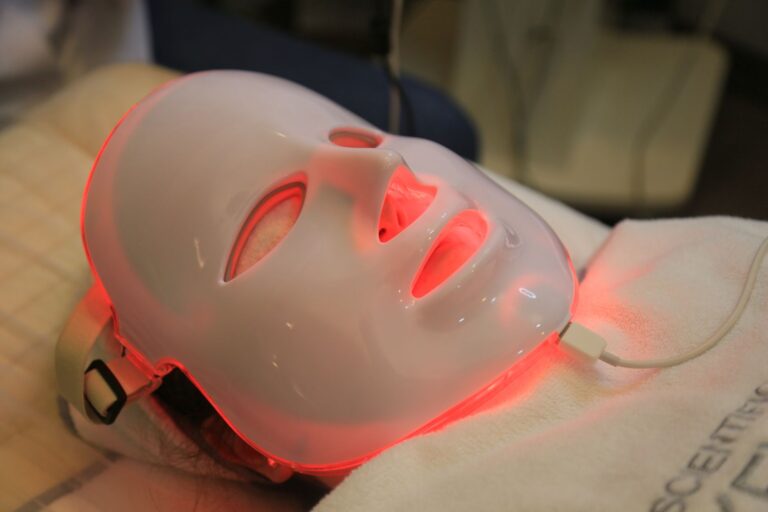
Low-Level Laser Therapy — also called photobiomodulation — delivers red light at a specific wavelength (typically 650–680nm) directly to the scalp. This light energy penetrates the skin and is absorbed by the mitochondria in hair follicle cells, triggering a cascade of biological effects:
- Increased ATP production — cells have more energy to function and grow
- Improved blood flow — better nutrient and oxygen delivery to follicles
- Reduced inflammation — a key driver of androgenetic alopecia
- Extended anagen (growth) phase — follicles spend more time actively growing hair
- Stimulation of dormant follicles — waking up miniaturized hairs
A landmark 2013 study published in The American Journal of Clinical Dermatology found that LLLT produced a 35% increase in hair growth in men with androgenetic alopecia. Multiple subsequent studies have confirmed similar findings for women as well.
Most devices require 2–3 sessions per week, 20–30 minutes per session. Results typically appear after 3–6 months of consistent use — patience is key.
What to Look For in an LLLT Hair Growth Device
Not all laser hair devices are created equal. Here’s what separates clinical-grade results from disappointing gadgets:
- FDA Clearance: Non-negotiable. Look for FDA-cleared devices, not just “FDA registered” products. Clearance means clinical efficacy has been reviewed.
- True Laser Diodes vs. LED: Laser diodes (coherent light) penetrate deeper than LED lights. The best devices use actual laser diodes — often listed as “laser + LED” hybrids with lasers being the active treatment component.
- Diode Count: More diodes = more scalp coverage. Look for at least 80–150+ diodes/emitters for full-scalp coverage.
- Wavelength: 650–670nm is the sweet spot for hair follicle stimulation. Some devices add 780–850nm near-infrared for deeper penetration.
- Form Factor: Helmets offer hands-free use; caps are portable; combs require manual movement but cost less.
- Treatment Time: 20–30 minutes is standard. Devices claiming 5-minute treatments with fewer diodes may be underpowered.
Best At-Home Laser Hair Growth Devices of 2026
1. iRestore Professional Laser Hair Growth System — Best Overall
The iRestore Professional is the gold standard for at-home LLLT in 2026. With 282 medical-grade laser diodes and LEDs (51 true lasers + 231 LEDs), it delivers comprehensive scalp coverage in a comfortable hands-free helmet design. It’s FDA-cleared for both men and women and has been clinically tested with a 100% success rate among participants in its own clinical study.
Treatment sessions are just 25 minutes every other day, and the built-in timer and auto-shutoff make it foolproof. The professional model adds near-infrared light at 830nm alongside the standard 650nm red light for enhanced deep-tissue stimulation. Most users report noticeably thicker hair by month 4–5.
Best for: Moderate to significant thinning; people who want the most clinical coverage available at home.
Wavelengths: 650nm + 830nm
Treatment time: 25 min, every other day
2. iRestore Essential Laser Hair Growth System — Best Value
If the Professional is out of budget, the iRestore Essential is an excellent entry point. It features 51 laser diodes and LEDs focused on the top and crown of the scalp — the most common areas of thinning. Same FDA-cleared technology, same 650nm wavelength, same 25-minute treatment protocol.
The Essential doesn’t cover the entire scalp like the Professional, but for people experiencing thinning concentrated at the crown and temples, it’s a smart, cost-effective choice. Thousands of verified Amazon reviewers report real regrowth results after 4–6 months of consistent use.
Best for: Early-stage thinning at crown and temples; budget-conscious buyers wanting proven technology.
Wavelengths: 650nm
Treatment time: 25 min, every other day
3. HairMax LaserBand 82 ComfortFlex — Best for Speed
If you can’t commit to 25-minute sessions, the HairMax LaserBand 82 is a game-changer. Its patented hair-parting teeth ensure the 82 laser diodes make direct contact with the scalp — maximizing light delivery. The treatment protocol? Just 3 minutes, 3x per week. That’s 9 minutes per week total.
HairMax has been in the LLLT space longer than almost anyone — their LaserComb was the first FDA-cleared hair growth device back in 2007. The LaserBand 82 is their most advanced band design, and at 82 medical-grade lasers plus their proprietary Flexible Comfort Band, it’s one of the most user-friendly devices available. Clinical studies show 35% more hair growth versus placebo.
Best for: Busy people who need ultra-fast sessions; those committed to consistency over maximum coverage.
Wavelengths: 655nm
Treatment time: 3 min, 3x/week (simply move band to 3 positions)
4. Kiierr 148 ProMax Laser Hair Growth Cap — Best Wearable Cap
The Kiierr 148 ProMax is the top-tier cap-style device in 2026. Unlike rigid helmet designs, this flexible cap fits heads of all sizes, can be worn discreetly under a hat, and covers the full scalp with 148 laser diodes. It connects via a small controller unit and runs a 30-minute treatment session.
Kiierr backs their devices with a 7-month money-back guarantee — one of the most generous in the industry — because they’re that confident in the results. The cap design is ideal for people who want to treat while working, watching TV, or even (very carefully) doing light tasks. FDA-cleared for men and women.
Best for: People who want portability and discreet use; full-scalp coverage without a bulky helmet.
Wavelengths: 650nm
Treatment time: 30 min, every other day
5. Theradome LH80 PRO Laser Hair Helmet — Best Helmet Design
The Theradome LH80 PRO is an engineering marvel. Developed by a former NASA biomedical engineer, it uses 80 proprietary VGP lasers — each calibrated to penetrate exactly 5mm below the scalp surface to reach the hair follicle’s bulge region, where stem cells reside. This precision targeting sets it apart from many competitors.
The LH80 PRO is fully wireless and cordless, with an internal battery and a simple push-button operation. Treatment sessions are 20 minutes, twice a week. It’s FDA-cleared for both men and women and comes with Theradome’s clinical support team. One of the sleekest, most futuristic-looking devices in the space.
Best for: Tech-forward users who want precision engineering; those preferring a wireless, cordless helmet.
Wavelengths: 678nm (optimized for follicle bulge penetration)
Treatment time: 20 min, 2x/week
6. HairMax Ultima 12 LaserComb — Best Budget Entry Point
The HairMax Ultima 12 LaserComb is the most accessible LLLT device on this list — and it’s the one that started the whole at-home hair growth device revolution. FDA-cleared since 2007, this handheld comb emits 12 medical-grade laser beams directly through the scalp as you comb through your hair.
Yes, it requires you to slowly comb it through sections of your hair (8 minutes, 3x per week), but for people with early-stage thinning on a tight budget, it’s an effective, proven starting point. The Ultima 12 is an upgrade from original models with more diodes and the same patented hair-parting teeth that maximize scalp contact.
Best for: Budget buyers; people with early-stage thinning; a low-commitment entry into LLLT.
Wavelengths: 655nm
Treatment time: 8 min, 3x/week
7. Capillus72 Pro Mobile Laser Therapy Cap — Best for Travel
The Capillus72 Pro is the original FDA-cleared laser therapy cap, built for people who need to treat on-the-go. It fits inside any baseball cap, runs off a small rechargeable battery pack, and delivers 6 minutes of laser therapy per day via 72 laser diodes. That’s it. Six minutes.
The trade-off vs. helmets with more diodes is that you need daily use rather than every-other-day. But the cap’s discretion is unmatched — you can literally wear it under a hat in public, during a meeting, or on a plane. Clinically studied with FDA clearance and a sleek carrying case included. Perfect for frequent travelers.
Best for: Travelers; people who want completely discreet daily treatment; those who hate “gear” sitting on their nightstand.
Wavelengths: 650nm
Treatment time: 6 min, daily
LLLT Hair Growth Devices: Comparison at a Glance
- iRestore Professional — 282 diodes/LEDs | 25 min EOD | Best Overall | Amazon →
- iRestore Essential — 51 diodes/LEDs | 25 min EOD | Best Value | Amazon →
- HairMax LaserBand 82 — 82 lasers | 3 min 3x/wk | Fastest Sessions | Amazon →
- Kiierr 148 ProMax Cap — 148 lasers | 30 min EOD | Best Cap | Amazon →
- Theradome LH80 PRO — 80 VGP lasers | 20 min 2x/wk | Wireless Helmet | Amazon →
- HairMax Ultima 12 — 12 lasers | 8 min 3x/wk | Budget Pick | Amazon →
- Capillus72 Pro — 72 lasers | 6 min daily | Travel-Friendly | Amazon →
Can You Combine LLLT With Other Hair Loss Treatments?
Absolutely — and dermatologists often recommend it. LLLT works synergistically with:
- Minoxidil (Rogaine): The most studied combination. Several studies show LLLT + minoxidil produces better results than either alone. Use minoxidil first, let it dry, then do your laser session.
- Finasteride / Dutasteride: Prescription DHT blockers address the hormonal root cause while LLLT stimulates follicle function. A one-two punch for androgenetic alopecia.
- Microneedling (dermaroller): Scalp microneedling on non-laser days can boost growth factor release. Many users alternate: microneedle one day, laser the next.
- Platelet-Rich Plasma (PRP): If you’re doing in-office PRP injections, LLLT at home between sessions can help maintain and extend results.
- Ketoconazole shampoo: Has mild DHT-blocking and anti-inflammatory properties. Perfectly safe to use alongside LLLT.
What to avoid: Don’t apply topical products immediately before LLLT. Serums, oils, or lotions on the scalp can block laser penetration. Always treat on a clean, dry scalp.
How Long Until You See Results?
This is the most common question — and the honest answer requires some expectation-setting:
- Months 1–2: You may notice increased shedding — this is normal and actually a good sign. The laser is pushing old hairs out to make way for new growth (similar to how minoxidil can cause initial shedding).
- Months 3–4: New growth typically starts appearing. Existing hairs often become visibly thicker and darker first.
- Months 5–6: Most users see their most dramatic improvement during this window. Hair feels fuller, parting lines appear smaller.
- Months 6–12+: Continued improvement with consistent use. Many dermatologists recommend using the device indefinitely to maintain results.
Key insight: LLLT results are maintenance-dependent. If you stop using the device, the follicles you’ve stimulated will gradually return to their previous state. Think of it like exercise — you need to keep going to keep the results.
Who Is LLLT NOT Right For?
LLLT is safe for most people, but there are some contraindications:
- People with active scalp conditions (psoriasis, seborrheic dermatitis flare-ups, open wounds)
- Those with completely bald areas for 5+ years (follicles may be too dormant to revive)
- Anyone taking photosensitizing medications — check with your doctor
- Pregnancy — insufficient safety data for laser devices during pregnancy
- People with Norwood Scale VI–VII (advanced baldness) — realistic expectations are essential here
Frequently Asked Questions
Is LLLT scientifically proven to grow hair?
Yes. Multiple peer-reviewed studies and several FDA clearances confirm that LLLT produces measurable hair growth in people with androgenetic alopecia. A 2014 meta-analysis in the Journal of Cosmetic and Laser Therapy found consistent, statistically significant results across trials. It’s not a miracle cure, but it’s one of the most evidence-backed non-prescription interventions available.
Do laser hair growth devices hurt?
No. LLLT uses very low-energy light — you typically feel nothing or just mild warmth on the scalp. There’s no pain, no heat damage, and no downtime.
Can women use laser hair growth helmets?
Absolutely. Most devices on this list are FDA-cleared for both men and women. Female pattern hair loss (Ludwig scale) responds well to LLLT. Women with postpartum shedding, hormonal hair loss, or diffuse thinning are excellent candidates.
Laser vs. LED hair growth devices — what’s the difference?
Laser diodes emit coherent light — photons all travel in the same direction at the same phase, allowing for deeper, more focused penetration into the follicle. LED light is incoherent — it scatters. While LED devices aren’t useless (they do have some benefits), for hair growth specifically, true laser diodes are more effective. The best devices use a combination of both, with lasers doing the heavy lifting.
How long do I need to use an LLLT device?
Most people commit to at least 6–9 months to see full results, then continue maintenance treatments 1–2x per week indefinitely. Many users simply incorporate it into their routine permanently.
Can I use a laser cap if I color my hair?
Yes. Hair dye does not affect LLLT efficacy, as the laser targets the follicle beneath the scalp surface. Just make sure to use the device on a clean scalp — wait until any post-color residue has been washed out.
Final Verdict: Which Laser Hair Growth Device Should You Buy?
The best laser hair growth device for most people in 2026 is the iRestore Professional — it delivers the most comprehensive coverage, the most clinical-grade diode count, and comes from a brand with an exceptional track record and customer support.
If budget is a concern, the iRestore Essential is a proven, affordable starting point. If you need speed above all, the HairMax LaserBand 82 is unbeatable at just 3 minutes per session. And if you want to treat on-the-go without anyone noticing, the Capillus72 Pro cap is discreet perfection.
The common thread? All seven devices on this list are FDA-cleared, clinically studied, and backed by real science. Hair loss is a vulnerable topic — and investing in a device that’s actually been tested is the most important decision you’ll make in this space.
Start early. Stay consistent. And give it six months — your future self’s hair will thank you.
Disclosure: This article contains affiliate links. If you purchase through our links, we may earn a commission at no extra cost to you. We only recommend products that meet our editorial standards for safety, quality, and clinical backing.