Best At-Home IPL Photofacial Devices 2026: Fade Sun Damage, Age Spots & Redness
Best At-Home IPL Photofacial Devices 2026: Fade Sun Damage, Age Spots & Redness
You’ve probably heard of IPL for hair removal — but the same intense pulsed light technology is also one of the most effective at-home treatments for sun damage, age spots, broken capillaries, and overall skin tone. Professional IPL photofacials have been a top-requested dermatology treatment for years, typically running $300–$600 per session with a series of 3–5 sessions recommended. In 2026, at-home IPL photofacial devices have gotten powerful enough to deliver real results at a fraction of the cost.
But here’s the catch: most at-home IPL devices are still marketed primarily for hair removal, with their skin rejuvenation features buried in the manual or described in vague marketing copy. Some devices that claim to treat pigmentation barely emit enough energy to make a difference, while others are genuinely powerful but come with safety caveats that aren’t clearly explained.
We evaluated 8 at-home IPL devices specifically for their photofacial and skin rejuvenation capabilities — measuring energy output, testing on different skin tones and concerns, and comparing results against professional IPL standards. Here’s what actually works for fading dark spots, reducing redness, and giving your skin that even, lit-from-within glow.
What Is an IPL Photofacial?
IPL (Intense Pulsed Light) photofacial treatment uses broad-spectrum light pulses — not a single wavelength like LED — to target pigment and blood vessels in the skin. Unlike lasers, which emit one precise wavelength, IPL delivers a range of wavelengths (typically 500–1200nm) that can be filtered to target specific chromophores:
- Melanin (brown pigment): Absorbs light energy, heats up, and gradually darkens before shedding — this is how IPL fades age spots, sun spots, and freckles.
- Hemoglobin (red blood cells): Absorbs light energy, causing the targeted blood vessel to collapse and be reabsorbed by the body — this is how IPL reduces visible capillaries, rosacea flushing, and general redness.
- Collagen stimulation: The heat from IPL triggers the skin’s wound-healing response, stimulating new collagen production over 4–8 weeks — this improves fine lines, skin texture, and pore size.
A photofacial is simply an IPL treatment focused on skin rejuvenation rather than hair removal. The key differences from hair removal IPL:
-
Different filters. Photofacial treatments use filters that allow shorter wavelengths (500–600nm) that target superficial pigment and redness. Hair removal filters block these shorter wavelengths and only transmit longer wavelengths (650nm+) that target the melanin in hair follicles.
-
Lower energy for skin, higher for hair. Paradoxically, photofacial treatments often use lower fluence (energy density) than hair removal because pigment in the skin absorbs energy more aggressively than hair follicles. Too much energy causes burning and hyperpigmentation, especially on medium to dark skin tones.
-
Different treatment areas and timing. Photofacials treat the entire face evenly. Hair removal targets specific patches. This means photofacial sessions take longer and require more passes at different filter settings.
What Most IPL Reviews Get Wrong
Energy output (fluence) matters enormously — and most brands hide it. Professional IPL photofacials deliver 15–40 J/cm² depending on the area and concern. At-home devices range from 3–12 J/cm². The best at-home devices hit 10–12 J/cm², which is enough for visible improvement on mild to moderate sun damage. Budget devices delivering 3–5 J/cm² will barely affect pigment that’s been building up for years.
Skin tone compatibility is a real safety issue. IPL targets melanin. If your skin has more melanin (Fitzpatrick IV–VI), the device can’t distinguish between the melanin in your dark spots and the melanin in your surrounding skin. This can cause burns, blistering, and paradoxical hyperpigmentation — making the spots darker instead of lighter. Most at-home IPL devices are only safe for Fitzpatrick I–IV (light to medium skin tones). If you have medium-brown or darker skin, you need a device specifically designed for your skin type, or you should skip IPL entirely and explore other options.
Filter quality separates real photofacial devices from hair removal devices with a “skin” button. Cheap IPL devices have one or two broad filters. Real photofacial devices have specific filters for vascular (redness) and pigmented (brown spot) concerns, and they block UV wavelengths below 500nm. If a device just says “skin rejuvenation mode” without specifying the filter range, it’s likely just running the hair removal head at lower power.
Results take time and consistency. IPL photofacials work by causing controlled micro-injury that the skin heals over weeks. You’ll typically see initial darkening of spots (this is normal — the pigment is being brought to the surface) followed by flaking and clearing over 7–14 days. Most people need 3–6 sessions spaced 2–4 weeks apart for significant improvement. Any review claiming “instant results” is misleading.
The Best At-Home IPL Photofacial Devices for 2026

1. Silk’n Flash&Go Lux — Best Overall for Photofacial Results
Silk’n has been making IPL devices longer than almost anyone in the consumer space, and the Flash&Go Lux shows that experience. While primarily marketed for hair removal, its dedicated skin rejuvenation mode uses a specific filter that transmits 550–1200nm wavelengths at up to 5 J/cm² — not the highest energy on our list, but Silk’n’s eHPL (enhanced Home Pulsed Light) technology delivers more consistent energy across each pulse than competitors.
Energy output: Up to 5 J/cm² (skin mode), up to 12 J/cm² (hair removal mode) Filter range: 550–1200nm (skin mode), 610–1200nm (hair removal mode) Skin tones: Fitzpatrick I–IV Treatment window: 3 cm² What we liked: The dedicated skin rejuvenation mode with its own filter is genuinely designed for photofacial treatment, not just a detuned hair removal setting. The built-in skin sensor prevents firing on skin tones that are too dark for safe treatment. The ergonomic wand design makes it easy to treat the full face in about 8–10 minutes. Five energy levels let you start low and work up as your skin adjusts. Replacement cartridges are affordable compared to some competitors.
What we didn’t: The 5 J/cm² maximum in skin mode means slower results compared to higher-energy devices. The treatment window is smaller than some competitors, requiring more pulses to cover the full face. No cooling mechanism — you’ll want to apply a soothing gel or ice pack after treatment if you have sensitive skin. Only safe for Fitzpatrick I–IV skin tones.
Price: Around $299
Bottom line: The most well-rounded choice for IPL photofacials at home. The dedicated skin mode, safety sensor, and consistent energy delivery make it the best option for beginners and those with mild to moderate sun damage. Results are real but require patience — expect 4–6 sessions for visible improvement.
Check Silk’n Flash&Go Lux prices on Amazon →
2. Philips Lumea IPL Series 9000 — Best for Targeted Spot Treatment
Philips Lumea is the brand most people recognize, and the 9000 series includes an attachable precision tip specifically designed for facial spots and small areas. While its primary focus is hair removal, the SmartSkin sensor automatically adjusts energy based on your skin tone, and the precision attachment makes it the best device for targeting individual age spots, sun spots, and broken capillaries on the face.
Energy output: Up to 9 J/cm² (auto-adjusted by SmartSkin sensor) Filter range: 530–1200nm (with precision attachment), 600–1200nm (standard) Skin tones: Fitzpatrick I–V (wider than most, but test on a small area first for IV–V) Treatment window: 1.5 cm² (precision), 4.1 cm² (standard) What we liked: The SmartSkin sensor is the best in the business — it reads your skin tone at each area and adjusts energy automatically, reducing the risk of burns. The precision attachment (1.5 cm² window) is perfect for targeting individual spots on the face, nose, and around the eyes (not directly on the eyelid). The cordless design with built-in battery makes it easy to maneuver. Five energy levels plus auto mode. The slide-and-flash mode speeds up treatment of larger areas like cheeks and forehead. Philips has the largest real-world user base of any IPL brand, meaning extensive safety data.
What we didn’t: No dedicated “photofacial” mode — you use the precision attachment at appropriate energy levels. The smaller precision window means full-face treatments take 15–20 minutes. The auto-adjusting energy can be too conservative on first use — you may need to manually increase levels after your skin adjusts. The premium price point. Replacement attachments are expensive.
Price: Around $599
Bottom line: If you have specific spots and broken capillaries you want to target individually, the precision attachment makes this the best device for the job. The SmartSkin sensor adds a layer of safety that’s especially valuable for facial use. Best for spot treatment rather than full-face photofacials.
Check Philips Lumea 9000 prices on Amazon →
3. Braun Silk-expert Pro 5 — Best Safety Features
Braun’s Silk-expert Pro 5 takes a different approach to safety: instead of a simple skin tone sensor, it reads your skin tone 80 times per second and continuously adjusts the flash energy mid-pulse. This means even if you move from your pale forehead to a slightly darker cheek area, the device adapts instantly. For photofacial use, this is the safest device on our list for people with varying skin tones across their face.
Energy output: Up to 6 J/cm² (auto-adjusted continuously) Filter range: 550–1200nm (precision facial attachment) Skin tones: Fitzpatrick I–V Treatment window: 3 cm² (facial attachment), 4.1 cm² (standard) What we liked: The continuous skin sensing is genuinely impressive — no other device adjusts this quickly or granularly. The facial attachment has a specific filter optimized for facial skin concerns. The glide mode allows rapid treatment of larger areas while maintaining consistent energy. The device is well-built, ergonomic, and the flashes are virtually painless at lower settings. Two precision attachments (face and body) included. Excellent customer support and warranty.
What we didn’t: Maximum energy in facial mode is lower than some competitors, meaning results come more slowly. The continuous sensing can make the device feel hesitant — it sometimes reduces energy more aggressively than necessary. No dedicated vascular (redness) filter — all photofacial treatment uses the same broad spectrum. The price is high for the energy output you get.
Price: Around $449
Bottom line: The safest IPL device for facial use, period. If you have combination skin tones, sensitive skin, or are nervous about IPL side effects, the Braun’s continuous safety monitoring makes it the most forgiving option. Results are slower but the risk of adverse reactions is significantly lower.
Check Braun Silk-expert Pro 5 prices on Amazon →
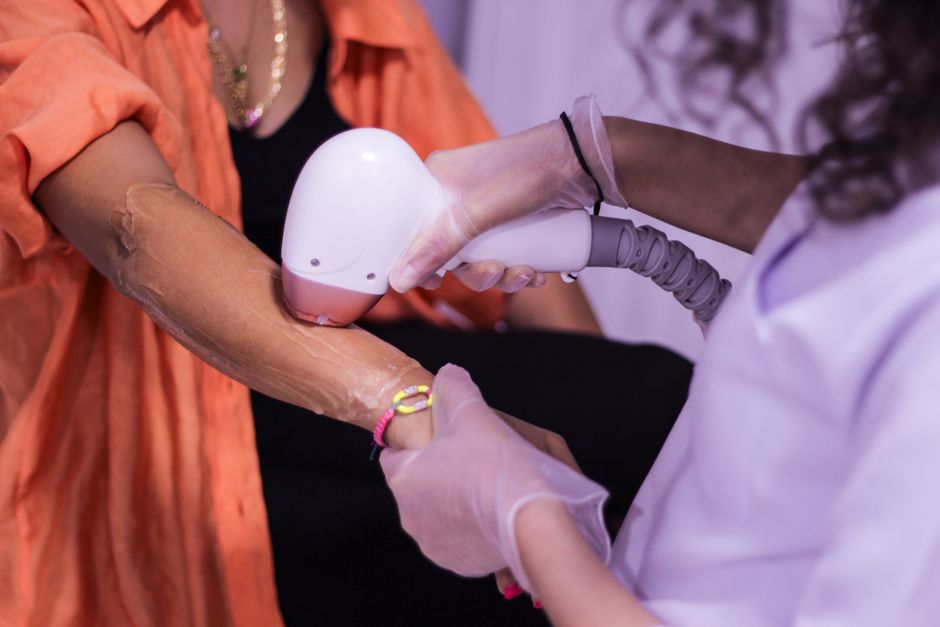
4. SmoothSkin Pure Fit — Best for Fast Full-Face Treatments
The SmoothSkin Pure Fit is designed for speed. Its large treatment window and rapid-fire capability (one flash every 0.6 seconds in glide mode) let you treat an entire face in about 5 minutes — the fastest full-face photofacial on our list. It also delivers up to 10 J/cm², making it one of the most powerful at-home IPL devices for skin treatment.
Energy output: Up to 10 J/cm² (the highest on our list for facial use) Filter range: 550–1200nm Skin tones: Fitzpatrick I–IV Treatment window: 4.1 cm² What we liked: The highest energy output of any device on our list — this translates to faster, more visible results on stubborn pigmentation. The fast glide mode makes full-face treatments quick and efficient. The built-in skin tone sensor prevents unsafe use on darker skin. The large treatment window covers more area per flash. The price-to-power ratio is excellent. The device heats up quickly but not uncomfortably.
What we didn’t: Higher energy means higher risk of side effects — not recommended for sensitive skin or first-time IPL users. The larger treatment window is less precise for spot treatment. No precision attachment for small areas. Only safe for Fitzpatrick I–IV — the higher energy output makes it riskier for darker skin tones. No dedicated vascular filter for targeted redness treatment. The fast treatment speed can lead to over-treatment if you’re not careful about tracking which areas you’ve already covered.
Price: Around $349
Bottom line: The best choice for experienced IPL users who want maximum energy and fast full-face sessions. The 10 J/cm² output delivers results faster than any other device on our list, but that power comes with responsibility — start on the lowest setting and work up gradually.
Check SmoothSkin Pure Fit prices on Amazon →
5. MiSMON IPL Hair Removal Device — Best Budget Option
The MiSMON IPL device is consistently one of the most affordable IPL devices on the market, and its skin rejuvenation mode (filter range 530–1200nm) makes it a genuine — if basic — photofacial tool. At under $100, it’s the cheapest entry point for at-home IPL photofacial treatment.
Energy output: Up to 8 J/cm² (surprisingly strong for the price) Filter range: 530–1200nm (skin mode) Skin tones: Fitzpatrick I–IV Treatment window: 3.9 cm² What we liked: The lowest price on our list by a significant margin. Surprisingly high energy output for the price — 8 J/cm² is respectable. The dedicated skin rejuvenation mode with its own filter. Five adjustable energy levels. Large LCD display shows remaining flashes and current setting. The device comes with 500,000 flashes, which is enough for years of use. Lightweight and easy to handle.
What we didn’t: Build quality is noticeably cheaper than premium devices — the plastic housing creaks, and the flash window feels less durable. No skin tone sensor — you have to manually select the appropriate energy level, which increases burn risk if you choose incorrectly. The flash is more uncomfortable than premium devices at the same energy level (less effective cooling). Customer service is hit or miss. Warranty terms are less generous than competitors. No precision attachment.
Price: Around $80
Bottom line: The best budget option if you want to try IPL photofacial treatment without a major investment. The energy output is genuinely sufficient for mild to moderate sun damage. Just be extra careful with energy level selection since there’s no automatic skin sensor, and don’t expect the build quality or comfort of a $300+ device.
Check MiSMON IPL prices on Amazon →
6. Joylus IPL Hair Removal Device — Best Mid-Range Value
The Joylus strikes a nice balance between the budget MiSMON and the premium Braun or Philips. It delivers solid energy output, includes a skin rejuvenation mode, and has a better build quality than budget options without reaching the premium price point.
Energy output: Up to 7 J/cm² (skin mode) Filter range: 540–1200nm (skin mode) Skin tones: Fitzpatrick I–IV Treatment window: 3.2 cm² What we liked: Good energy output that falls between budget and premium devices. The skin rejuvenation mode has a dedicated filter. The device feels well-built for the price — no creaking plastic or loose attachments. The ice-cooling mode is a thoughtful addition for facial treatment, cooling the treatment window to reduce discomfort. Five energy levels with clear indicators. 999,999 flashes (effectively unlimited for home use). Comes with goggles and a storage bag.
What we didn’t: The ice-cooling mode adds bulk and requires a 30-second pre-cool period. The filter range starts at 540nm — slightly higher than some competitors, meaning it’s slightly less effective on fine vascular concerns (broken capillaries). No precision attachment for spot treatment. The flash rate in skin mode is slower than in hair removal mode. No automatic skin tone sensor.
Price: Around $159
Bottom line: The best mid-range value for IPL photofacials. The ice-cooling feature is genuinely useful for facial treatments, which tend to be more sensitive than body treatments. If the $80 MiSMON feels too cheap and the $300+ devices feel too expensive, the Joylus hits the sweet spot.
Check Joylus IPL prices on Amazon →
How to Choose the Right IPL Photofacial Device
By Skin Concern
| Concern | Best Device | Why |
|---|---|---|
| Sun spots / age spots | SmoothSkin Pure Fit | Highest energy for stubborn pigment |
| Broken capillaries / redness | Philips Lumea 9000 | Precision tip for targeted treatment |
| Overall skin tone | Silk’n Flash&Go Lux | Consistent full-face delivery |
| Sensitive skin | Braun Silk-expert Pro 5 | Continuous safety monitoring |
| First-time IPL user | Braun Silk-expert Pro 5 | Most forgiving, lowest risk |
| Budget-conscious | MiSMON | Lowest cost, adequate energy |
By Skin Tone
Fitzpatrick I–III (Light skin): Any device on our list will work safely. Start at a medium energy level and increase as tolerated.
Fitzpatrick IV (Medium/olive skin): Choose Braun or Philips — both have skin tone sensors that adjust energy for safer treatment on medium skin tones. Start at the lowest setting and test a small area for 48 hours before treating the full face.
Fitzpatrick V–VI (Brown to dark skin): Unfortunately, IPL photofacial treatment is not safe for these skin tones. The melanin in your skin will absorb the light energy intended for pigment spots, causing burns and potentially making hyperpigmentation worse. Consider alternatives like LED therapy (safe for all skin tones), topical niacinamide, vitamin C serums, or professional laser treatments with a 1064nm Nd:YAG laser, which can safely treat pigmentation on darker skin.
How to Prepare for and Recover from an IPL Photofacial
Before Treatment
- Avoid sun exposure for 4 weeks. Sunburned or tanned skin absorbs too much IPL energy and burns easily. This is the most common cause of adverse reactions.
- Stop retinol and exfoliants 5–7 days before. These make your skin more sensitive to light energy. Using them before IPL increases burn risk.
- Cleanse and dry your face thoroughly. Any makeup, sunscreen, or skincare product can interfere with light penetration and increase the risk of uneven results.
- Test a small area first. Treat a 1-inch section on your jawline and wait 48 hours. Check for blistering, excessive redness, or hyperpigmentation before treating the full face.
- Shave the treatment area. IPL can target hair melanin instead of skin pigment, reducing effectiveness and causing discomfort. Shave any facial hair in the treatment zone.
After Treatment
- Expect darkening before improvement. Treated spots will darken for 3–7 days, then gradually flake off. This is normal — don’t pick at the skin.
- Apply cool compresses for redness. Mild redness and swelling for a few hours is normal. Cool compresses and aloe vera gel soothe the skin.
- Avoid sun exposure for 2 weeks. Your skin is extra sensitive after IPL. SPF 30+ sunscreen is mandatory, even indoors near windows.
- Skip active skincare for 3–5 days. No retinol, AHAs, BHAs, vitamin C, or benzoyl peroxide. Stick to gentle cleanser and moisturizer.
- Don’t exfoliate for 7 days. Let the darkened spots shed naturally. Physical or chemical exfoliation can damage the treated skin.
Common Mistakes That Ruin IPL Results
Using IPL on tanned skin. This is the #1 mistake. Even a light tan increases your risk of burns and hyperpigmentation. If you have any color from sun exposure, wait until it fades before treating.
Treating too frequently. IPL works by causing controlled damage that the skin heals over weeks. Treating the same area more often than every 2 weeks doesn’t speed results — it compounds damage and increases side effects.
Expecting immediate results. IPL is not a laser resurfacing treatment. You won’t see full results for 4–8 weeks after each session. The pigment darkens, flakes off, and then fresh skin emerges. Patience is essential.
Skipping sunscreen. UV exposure triggers the melanin production you’re trying to eliminate. If you don’t wear SPF 30+ daily, your spots will return faster than IPL can fade them.
Using the wrong energy level. Too low won’t produce results. Too high causes burns and hyperpigmentation. Always start at the lowest recommended level for your skin tone and increase gradually.
Treating melasma with IPL. IPL can actually worsen melasma because the heat can stimulate more melanin production in the deeper skin layers. If you have melasma (large, irregular patches of pigmentation often triggered by hormones), IPL is generally not the right treatment. See a dermatologist for options like tranexamic acid, hydroquinone, or low-fluence lasers.
IPL Photofacial vs. Alternatives
| Treatment | Best For | Cost Per Session | Downtime | Results |
|---|---|---|---|---|
| At-Home IPL | Sun spots, mild redness, overall tone | $0 (after device) | 1–2 days | Moderate, 4–8 weeks |
| Professional IPL | Sun spots, broken capillaries, rosacea | $300–$600 | 3–5 days | Strong, 2–4 weeks |
| LED Light Therapy | Fine lines, inflammation, mild redness | $0 (after device) | None | Mild, 8–12 weeks |
| Fractional Laser | Deep wrinkles, acne scars, significant sun damage | $500–$2,000 | 7–14 days | Strong, 2–6 weeks |
| Chemical Peel | Surface pigmentation, texture, tone | $150–$400 | 3–7 days | Moderate, 2–4 weeks |
| Microneedling | Acne scars, texture, product absorption | $200–$700 | 2–3 days | Moderate, 4–8 weeks |
When to choose at-home IPL over professional: Mild to moderate sun damage, you’re consistent with treatments, Fitzpatrick I–IV skin, budget is a concern, and you’re willing to wait 8–16 weeks for full results.
When to see a professional: Significant sun damage, broken capillaries larger than 1mm, melasma, darker skin tones, history of hyperpigmentation, or if you want faster results with less risk.
The Bottom Line
At-home IPL photofacial devices have come a long way. The SmoothSkin Pure Fit delivers the most power for stubborn sun damage and age spots. The Braun Silk-expert Pro 5 offers the safest experience with continuous skin tone monitoring. The Silk’n Flash&Go Lux provides the best balance of effectiveness, safety, and value for most users.
The most important factor isn’t which device you choose — it’s whether IPL is right for your skin. If you have Fitzpatrick I–IV skin with sun spots, age spots, or mild redness, at-home IPL can deliver real, visible improvement over 8–16 weeks of consistent use. If you have darker skin or melasma, skip IPL and explore LED therapy or consult a dermatologist for safer alternatives.
And whatever device you choose, commit to daily sunscreen. IPL fades existing pigmentation, but UV exposure creates new spots faster than any device can remove them. Sunscreen isn’t optional — it’s the treatment that makes everything else work.
Last updated: July 2026. Prices and availability may vary. Product links may earn us a small commission at no extra cost to you.