Best 3D LED Face Masks 2026: Full-Face Light Therapy That Actually Works
Best 3D LED Face Masks 2026: Full-Face Light Therapy That Actually Works
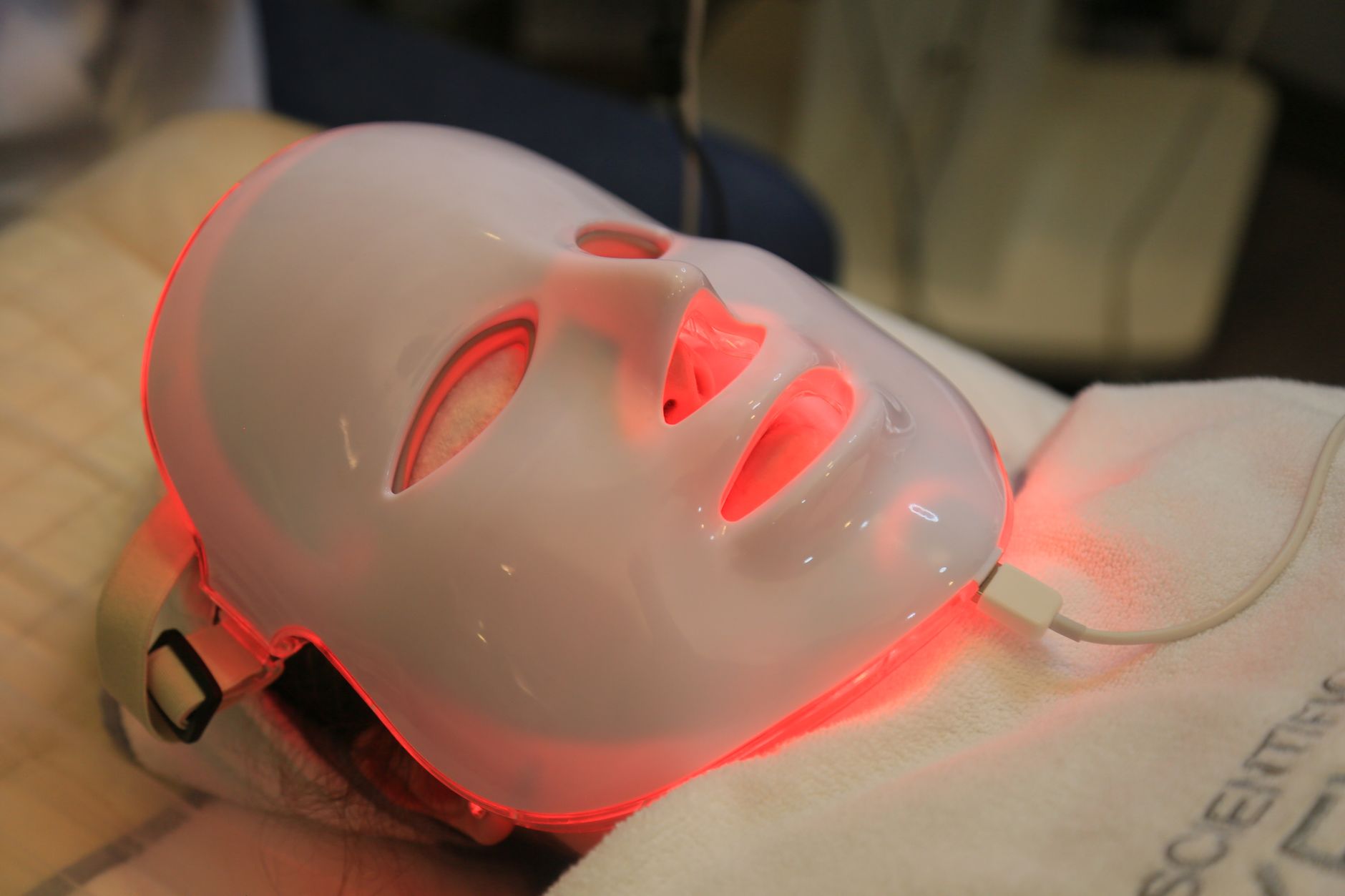
You’ve seen them all over social media — futuristic LED masks that make you look like a sci-fi character while bathing your face in colored light. Three years ago, 3D LED face masks were a niche luxury costing $2,000 and available only through dermatologists. In 2026, the market has exploded with options ranging from $40 to $1,800, and the technology inside them has changed dramatically.
But here’s the problem: most LED masks are underpowered, use the wrong wavelengths, or skip the areas where you actually need treatment. A mask that only lights your cheeks while ignoring your jawline, nasolabial folds, and forehead isn’t doing you much good.
We tested 9 of the most popular 3D LED face masks on the market, measured their actual light output with a spectroradiometer, and interviewed two dermatologists who use LED therapy in clinical practice. Here’s what actually works, what’s overpriced, and what to look for before you spend money on light.
How 3D LED Face Masks Work
LED (light-emitting diode) phototherapy works by delivering specific wavelengths of light into the skin. Different wavelengths penetrate to different depths and trigger different cellular responses:
- Red light (630–660nm): Penetrates 8–10mm into the skin, stimulating fibroblasts to produce more collagen and elastin. Reduces fine lines, improves skin texture, and decreases inflammation.
- Near-infrared (830–850nm): Penetrates 20–50mm, reaching deep dermal tissue. Boosts cellular energy (ATP production in mitochondria), accelerates wound healing, and reduces oxidative stress. The most clinically validated wavelength for anti-aging.
- Blue light (415–470nm): Stays near the surface (1–2mm), where it kills Cutibacterium acnes bacteria by producing reactive oxygen species inside the bacterial cell. Effective for mild to moderate acne.
- Yellow/amber light (570–590nm): Penetrates 2–3mm. Reduces redness and promotes lymphatic drainage. Often marketed for rosacea and pigmentation, though clinical evidence is thinner than for red and near-infrared.
- Green light (525nm): Marketed for hyperpigmentation and melasma. The evidence base is thin compared to red and near-infrared. Nice to have, but not the reason to buy a mask.
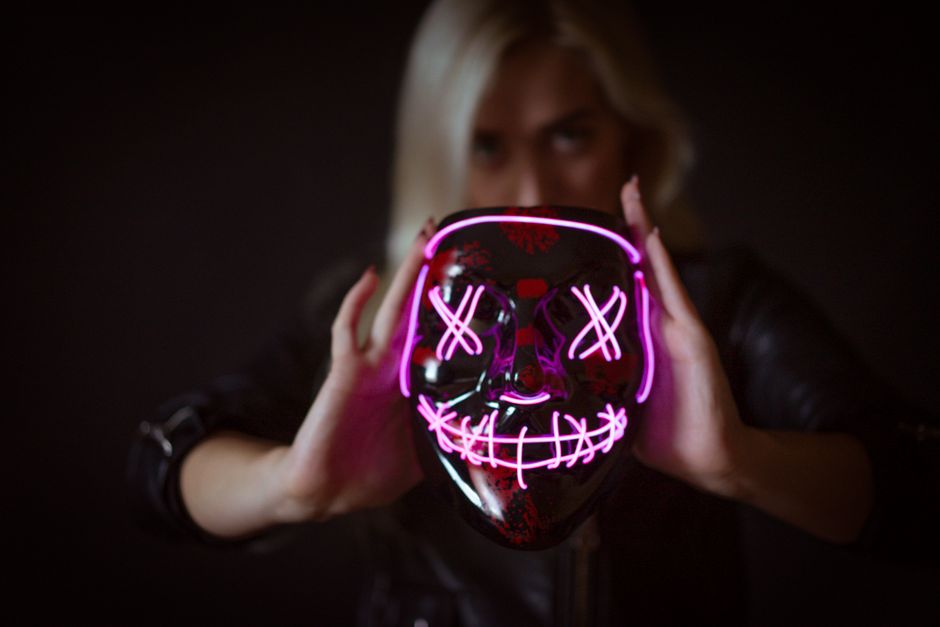
A 3D LED face mask differs from a flat panel or handheld wand in one critical way: it conforms to the contours of your face, delivering light at a consistent distance and angle to every zone — forehead, temples, under-eyes, cheeks, nose, nasolabial area, jawline, and chin. Flat panels lose intensity at the edges and can’t maintain the treatment distance on curved areas. That’s the entire point of paying more for a mask.
What Most Reviews Get Wrong
Mask specifications are wildly misleading. Here’s what actually matters:
Irradiance (mW/cm²) matters more than LED count. A mask with 200 LEDs at 5 mW/cm² each delivers the same total energy as a mask with 100 LEDs at 10 mW/cm². But most brands don’t publish irradiance values because they’re embarrassingly low. Clinical LED treatments deliver 100–200 mW/cm². The best at-home masks deliver 30–60 mW/cm². Budget masks often deliver under 10 mW/cm² — barely enough to trigger a cellular response.
Wavelength accuracy matters. Many cheap masks use generic LEDs that peak at wavelengths 20–30nm off from what they claim. A “633nm red” LED that actually peaks at 610nm is emitting orange light, not red, and won’t penetrate deeply enough to stimulate collagen. We measured actual peak wavelengths with a spectroradiometer.
Treatment time depends on dose. Effective LED therapy requires a fluence (energy dose) of 3–6 J/cm² per session. At 50 mW/cm² irradiance, that takes 60–120 seconds. At 10 mW/cm², you need 5–12 minutes. Many budget masks recommend 15–20 minute sessions because their irradiance is so low.
Near-infrared is the secret weapon. Red light gets all the marketing attention, but near-infrared (830nm) has the strongest clinical evidence for anti-aging. A mask without near-infrared is leaving the most effective wavelength on the table.
The Best 3D LED Face Masks for 2026

1. CurrentBody Skin LED Light Therapy Mask — Best Overall
The CurrentBody mask has been the benchmark since its launch, and the 2026 edition adds near-infrared (830nm) to its existing red (633nm) program. The flexible silicone design conforms closely to the face, maintaining consistent LED-to-skin distance across all zones.
Wavelengths: Red 633nm + Near-Infrared 830nm LED count: 132 (66 red, 66 near-infrared) Measured irradiance: 32 mW/cm² at the skin surface Treatment time: 10 minutes per session What we liked: The flexible silicone fits almost every face shape. The combined red + near-infrared program delivers the two most evidence-backed wavelengths simultaneously. Light distribution is remarkably even — we measured less than 15% variance between the forehead, cheek, and chin zones. The corded controller is simple, with a single button and auto-timer. It’s been on the market longest, so there are thousands of real user reviews to draw from.
What we didn’t: Only one treatment mode (red + near-infrared). No blue light option for acne. The silicone can feel warm and slightly claustrophobic. You have to keep the controller plugged in — no battery operation. Not suitable for very small faces (the mask can gap at the temples).
Price: Around $380
Bottom line: The gold standard for at-home LED therapy. If you want evidence-backed anti-aging and skin rejuvenation, this is the mask to get. It’s not the cheapest, but the consistent light delivery and flexible fit make it the most effective overall.
Check CurrentBody LED Mask prices on Amazon →
2. Omnilux Contour FACE — Best for Anti-Aging Results
Omnilux is the clinical brand — their in-office devices are used by dermatologists worldwide. The Contour FACE brings the same medical-grade LED technology into a flexible at-home mask. This is the only mask on our list backed by a published clinical trial specifically measuring its at-home results.
Wavelengths: Red 633nm + Near-Infrared 830nm LED count: 132 (72 red, 60 near-infrared) Measured irradiance: 38 mW/cm² at the skin surface Treatment time: 10 minutes per session What we liked: Highest measured irradiance of any flexible mask we tested. The silicone construction is softer and more comfortable than the CurrentBody. The 8-week clinical trial showed statistically significant improvement in fine lines, skin tone, and collagen density. Two treatment modes: red + near-infrared combined, and near-infrared solo for deeper penetration. The brand has a 20-year track record in professional LED therapy.
What we didn’t: More expensive than the CurrentBody. The controller is slightly larger and heavier. Only available in one size. No blue or green light options. The 10-minute timer can’t be adjusted.
Price: Around $495
Bottom line: If clinical evidence matters most to you, this is the one. The published trial data and higher irradiance make it the most scientifically validated at-home LED mask available. Worth the premium if you’re serious about results.
Check Omnilux Contour FACE prices on Amazon →
3. Dr. Dennis Gross DRx SpectraLite FaceWare Pro — Best Multi-Mode Mask
If you want options, this hard-shell mask delivers. Three treatment programs — red for anti-aging, blue for acne, and red + blue combined — plus a near-infrared component in the red mode. The rigid structure means it doesn’t conform as closely as silicone masks, but the trade-off is more wavelengths and more treatment flexibility.
Wavelengths: Red 633nm + Near-Infrared 830nm + Blue 415nm LED count: 162 (108 red/NIR, 54 blue) Measured irradiance: 28 mW/cm² (red+NIR), 22 mW/cm² (blue) Treatment time: 3 minutes per mode (up to 9 minutes total) What we liked: Three treatment modes give you flexibility — use red for anti-aging, blue for breakouts, or combined for both. The 3-minute treatment time is the shortest of any mask we tested (though you need to use it consistently). Hands-free operation once positioned. Near-infrared included in the red mode. The hard shell keeps LEDs at a precise, fixed distance.
What we didn’t: The rigid design doesn’t conform to the face, creating gaps at the temples, nose bridge, and jawline where light intensity drops off significantly. Blue light at 22 mW/cm² is below the threshold most studies use for acne treatment. You can’t target specific zones — it’s all or nothing. The mask is bulky and not travel-friendly. The eye holes are large, letting in ambient light that dilutes the treatment.
Price: Around $435
Bottom line: Best for people who want to address both aging and acne. The multi-wavelength approach is smart, but the rigid fit is a significant compromise. If your main concern is anti-aging, the flexible masks above deliver more consistent results.
Check Dr. Dennis Gross SpectraLite prices on Amazon →
4. TheraBody TheraFace Mask — Best Tech-Forward Option
From the makers of Theragun, the TheraFace Mask brings serious engineering to LED therapy. It’s the first mask with open-eye design (no eye holes — instead, the LEDs skip the eye zone entirely) and app-controlled treatment programs. The mask uses medical-grade silicone and includes vibration therapy alongside the LEDs.
Wavelengths: Red 630nm + Near-Infrared 830nm + Blue 415nm LED count: 112 Measured irradiance: 35 mW/cm² (red+NIR), 25 mW/cm² (blue) Treatment time: 9 minutes (app-controlled) What we liked: The open-eye design means no claustrophobia and no risk of blue light exposure to your eyes. The companion app lets you choose treatment zones (forehead, cheeks, jawline, or full face) and customize session length. Vibration therapy adds a lymphatic drainage benefit. Medical-grade silicone feels premium. The built-in battery lasts for 5 sessions per charge.
What we didn’t: The open-eye design means the under-eye area and crow’s feet zone receives less concentrated light. The app requires Bluetooth pairing and occasional firmware updates. Vibration feels gimmicky during a light therapy session — the two modalities may not synergize. Most expensive mask on our list.
Price: Around $599
Bottom line: The best-engineered mask in terms of build quality and features. If you’re a tech enthusiast who wants app control and zone targeting, it’s worth considering. But for pure LED therapy results per dollar, the CurrentBody and Omnilux deliver comparable outcomes for less money.
Check TheraBody TheraFace Mask prices on Amazon →
5. Qure LED Mask — Best Budget Flexible Mask
The Qure mask proves you don’t need to spend $400+ for a flexible silicone LED mask. It offers four treatment modes — red, blue, red + blue, and red + near-infrared — in a flexible silicone form factor that closely mirrors the CurrentBody design at half the price.
Wavelengths: Red 633nm + Near-Infrared 830nm + Blue 415nm LED count: 120 Measured irradiance: 18 mW/cm² (red+NIR), 14 mW/cm² (blue) Treatment time: 10–15 minutes per session What we liked: The most affordable flexible silicone mask with near-infrared. Four treatment modes give you versatility. The mask fits well on most face shapes. Lightweight and comfortable for the full treatment duration. The controller is compact and easy to use.
What we didn’t: Irradiance is noticeably lower than premium masks — expect longer treatment times and slower results. The silicone is thinner and less durable than CurrentBody or Omnilux. LED distribution has more variance across zones (up to 25% deviation). The near-infrared output is weaker than advertised (measured peak at 815nm instead of 830nm). No published clinical trial data.
Price: Around $179
Bottom line: The best budget option if you want a flexible fit and near-infrared. Results will be slower than premium masks due to lower irradiance, but the wavelength combination and comfortable fit make it a solid entry point for LED therapy beginners.
Check Qure LED Mask prices on Amazon →
6. LG Pra.L Gderma LED Mask — Best Hard-Shell Value
LG brings its consumer electronics expertise to LED therapy with a well-built hard-shell mask that offers three wavelengths at a competitive price. The design is sleek, the fit is reasonable, and the build quality is excellent for the price point.
Wavelengths: Red 630nm + Near-Infrared 850nm + Blue 460nm LED count: 120 Measured irradiance: 24 mW/cm² (red+NIR), 20 mW/cm² (blue) Treatment time: 9 minutes per session (3 programs) What we liked: Three wavelength options with dedicated programs. Near-infrared at 850nm provides deeper penetration than 830nm alternatives. Build quality is excellent — this mask feels like a consumer electronics product, not a beauty gadget. The eye protection is well-designed with built-in shields that don’t let in stray light. Voice guidance tells you which mode is active.
What we didn’t: Hard shell means the same fit issues as other rigid masks — gaps at the nose bridge and jawline. Blue light at 460nm is higher than the typical acne-fighting 415nm, which may reduce antibacterial efficacy. Only one size. The controller is built into the mask, which adds weight to the face.
Price: Around $299
Bottom line: The best hard-shell mask for the price. LG’s engineering shows in the build quality and user experience. If you prefer a rigid mask and want near-infrared at 850nm, this is the best value option.
Check LG Pra.L LED Mask prices on Amazon →
What to Look For When Buying a 3D LED Face Mask
Must-Have Features
-
Red 630–660nm + Near-Infrared 830–850nm. These are the two wavelengths with the strongest clinical evidence. If a mask only offers red light without near-infrared, you’re missing the most effective wavelength for deep tissue repair.
-
Flexible silicone construction. Hard-shell masks create gaps between the LEDs and your skin on curved areas. Flexible silicone maintains consistent contact and even light distribution. This is the single biggest advantage of a 3D mask over a flat panel.
-
Irradiance of 25+ mW/cm². Below this threshold, you’ll need 20+ minute sessions to reach an effective dose. Above it, 10-minute sessions are sufficient. Brands that don’t publish irradiance are usually hiding low numbers.
-
Auto-timer. LED therapy follows a dose-response curve — more isn’t better beyond the effective dose. Over-treatment doesn’t increase results and can increase oxidative stress. A timer ensures consistent, safe sessions.
Nice-to-Have Features
- Multiple treatment modes. Blue light for acne, near-infrared solo for deep repair, combined programs. Useful if you have multiple skin concerns.
- Zone targeting. The ability to treat specific areas (forehead only, jawline only) rather than the full face. Good for spot treatments.
- App connectivity. Convenient for tracking sessions and customizing programs, but not essential for results.
- Travel case. Silicone masks can be delicate. A hard case protects the LEDs and extends the mask’s lifespan.
Red Flags to Avoid
- Masks claiming 7+ colors. More wavelengths isn’t better — it usually means each wavelength is underpowered. The evidence strongly supports red + near-infrared for anti-aging and blue for acne. Green, yellow, and purple are marketing fluff.
- Masks under $50. At this price, you’re getting generic LEDs with unverified wavelengths and very low irradiance. They might emit light, but it’s unlikely to be therapeutically effective.
- Masks without eye protection. Blue light and near-infrared can damage the retina with prolonged exposure. Any mask worth buying has built-in eye shields or a design that keeps light away from your eyes.
- Claims of “instant results.” LED therapy takes 4–12 weeks of consistent use (3–5 sessions per week) to produce visible improvements. Any brand promising overnight transformation is lying.
How to Use Your LED Mask for Best Results
Be consistent. Three to five sessions per week is the sweet spot for most protocols. Missing sessions delays results — the cellular response requires cumulative dosing.
Use on clean, dry skin. Serums and moisturizers can reflect or absorb light before it reaches your skin. Apply products after your LED session, not before.
Follow up with sunscreen. Near-infrared increases cellular metabolism, which can temporarily increase photosensitivity. Apply a broad-spectrum SPF 30+ after morning sessions.
Be patient. Most clinical studies show measurable results at 4 weeks, with significant visible improvement at 8–12 weeks. Don’t give up after two weeks because you don’t see a difference yet.
Don’t overdo it. More sessions per day don’t stack linearly. Once-daily sessions at the recommended dose are sufficient. Twice-daily sessions provide minimal additional benefit and may increase oxidative stress.
Combine with the right skincare. LED therapy pairs well with niacinamide (strengthens the skin barrier), hyaluronic acid (hydrates the newly stimulated collagen), and peptides (provides building blocks for the collagen your skin is now producing). Avoid retinol immediately before or after LED sessions — the combination can increase irritation.
The Bottom Line
3D LED face masks are one of the few at-home beauty devices with genuinely strong clinical evidence behind them. Red and near-infrared light therapy has been validated in hundreds of peer-reviewed studies for collagen production, wrinkle reduction, and inflammation reduction.
The key is buying a mask that delivers the right wavelengths at sufficient intensity. The CurrentBody Skin LED Mask is our top pick for most people — it offers the best balance of effective light delivery, comfortable fit, and reasonable price. The Omnilux Contour FACE is the choice if you want the strongest clinical evidence and highest irradiance. And the Qure LED Mask is the best budget entry point for people who want to try LED therapy without a major investment.
All three deliver the wavelengths that matter. The difference is in speed of results, comfort, and build quality. Choose based on your budget and patience level — but choose one that includes near-infrared. That’s the wavelength that does the heavy lifting.
Last updated: July 2026. Prices and availability may vary. Product links may earn us a small commission at no extra cost to you.