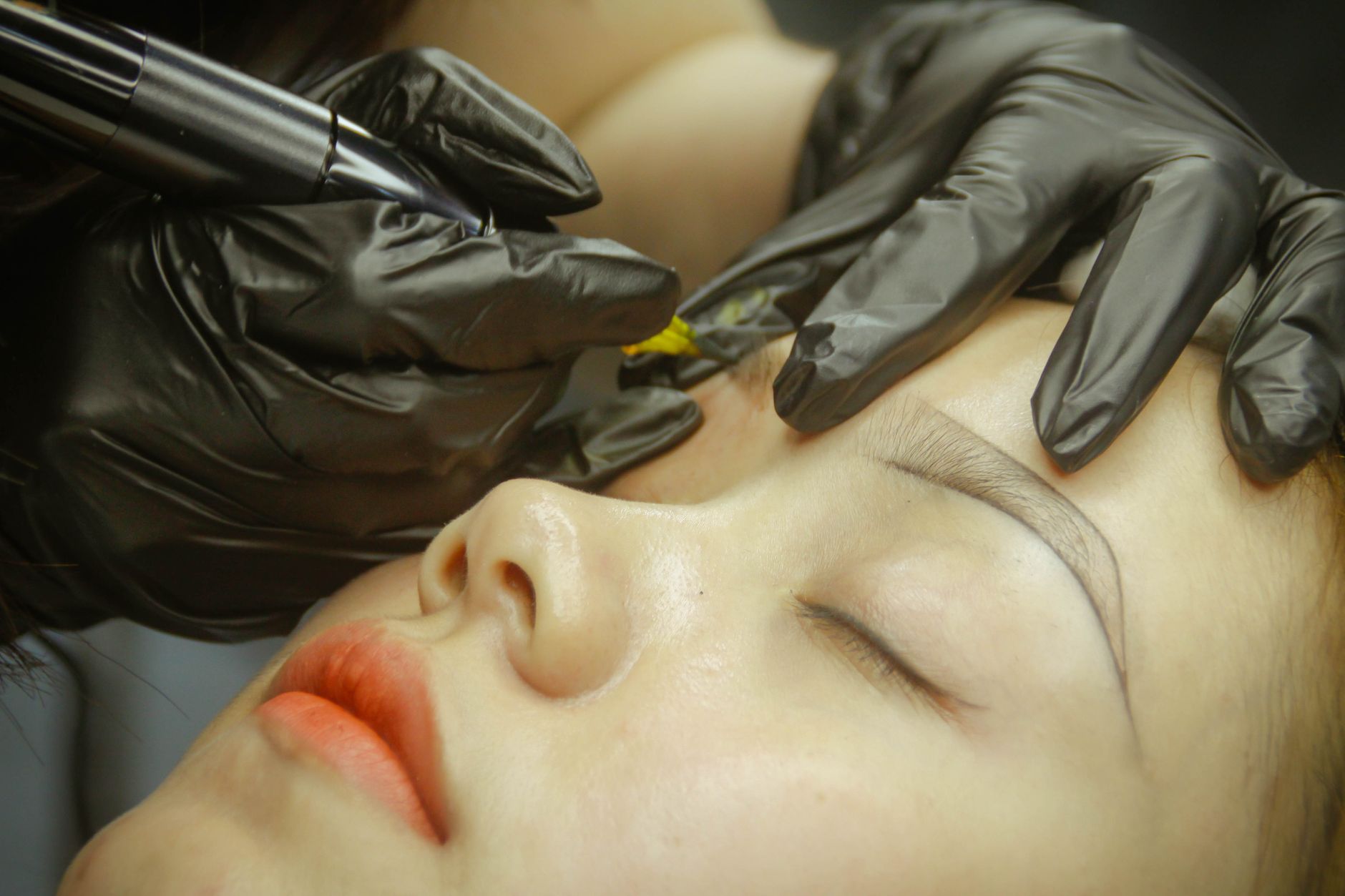
Best At-Home Plasma Pen Devices 2026: Fibroblast Skin Tightening That Actually Works
Best At-Home Plasma Pen Devices 2026: Fibroblast Skin Tightening That Actually Works
If you’ve been scrolling through before-and-after photos of dramatically lifted eyelids and smoothed wrinkles — all done without going under the knife — you’ve probably already come across plasma pen treatments. Once reserved exclusively for professional clinics, fibroblast plasma therapy is now available in at-home devices that deliver real, lasting results at a fraction of the cost.
But not all plasma pens are created equal. Some are safe, effective, and worth the investment. Others are underpowered, poorly made, or outright dangerous. In this guide, we break down exactly what plasma pens do, which devices are worth your money in 2026, and how to use them safely to get the tightening results you’re after.
What Is a Plasma Pen? How Does Fibroblast Therapy Work?
A plasma pen works by ionizing atmospheric gas (the air around the tip) to create a tiny electrical arc — called plasma — between the device tip and your skin. This arc delivers controlled micro-trauma to the skin surface without actually touching it, triggering your skin’s natural wound-healing response.
The result? Fibroblast cells — the skin cells responsible for producing collagen and elastin — go into overdrive. New collagen forms, existing collagen contracts, and over the following weeks, skin physically tightens and lifts. Small carbon crusts (called “dots” or “dots”) form at each treatment site, shed within 5–10 days, and leave behind tighter, smoother skin underneath.
What plasma pens can treat:
- Hooded or drooping eyelids (non-surgical blepharoplasty)
- Under-eye crepey skin and fine lines
- Nasolabial folds and smile lines
- Neck and jawline laxity
- Forehead lines and frown lines
- Stretch marks and acne scars
- Lip lines and lip lifting
- Loose skin on knees, abdomen, and décolletage
Results from a professional session can last 2–5 years. At-home devices operate at lower power for safety reasons, but with consistent use, visible tightening typically appears within 4–8 weeks.
What to Look for in an At-Home Plasma Pen
Before buying, evaluate these key factors:
- Power output (watts/voltage): Effective devices typically operate between 3–7W. Too low = no results. Too high without experience = scarring.
- Intensity levels: Multiple settings let you start gentle and progress safely.
- Tip quality: Replaceable, sterile titanium or steel tips are non-negotiable.
- Included numbing guidance: Reputable brands include aftercare kits or instructions on topical anesthetic use.
- Warranty & customer support: Plasma pen treatment is a multi-session commitment — brand support matters.
The 6 Best At-Home Plasma Pen Devices for 2026
1. Neatcell Picosecond Pen — Best for Beginners
The Neatcell Plasma Pen has become one of the most popular entry-level options for a reason: it’s genuinely adjustable, ships with replacement tips, and comes in at a price point that makes first-time experimentation feel low-risk.
The device offers 9 intensity levels, starting gentle enough for thin skin areas like under-eyes. The tip produces a consistent plasma arc, and the pen’s ergonomic shape makes it easy to control during delicate work around the orbital area.
Best for: First-time users, fine lines, under-eye tightening
Key specs: 9 levels, USB rechargeable, includes 40 replacement needles
Results timeline: Visible tightening in 4–6 weeks
Pros: Affordable, widely available, replaceable tips
Cons: Less clinical-grade power for deep folds
2. Dr. Pen Plasma Pen A10 — Best Overall Performance
Dr. Pen, a brand already trusted for its microneedling pens, has brought the same engineering precision to plasma. The Dr. Pen A10 Plasma Pen features 16 adjustable power levels — one of the widest ranges available — and a finely calibrated tip that delivers a controlled, consistent arc even when working quickly.
Where this device stands out is in its digital display, which shows your exact power level, battery life, and treatment time. For users who want clinical-level precision without a clinical price tag, this is the gold standard in the at-home category.
Best for: Intermediate to advanced users, deeper lines, jawline lifting
Key specs: 16 levels, digital display, rechargeable, includes carrying case
Results timeline: Noticeable lift in 3–5 weeks
Pros: Precise control, trusted brand, excellent customer support
Cons: Higher price point; requires patience to master higher levels
3. Jastmey Plasma Pen — Best Budget Pick
For those who want to try fibroblast therapy without committing to a premium price, the Jastmey Plasma Pen punches well above its price class. It delivers a reliable plasma arc, charges via USB-C, and includes a solid starter kit with multiple tip sizes for different treatment zones.
It won’t replace a Dr. Pen for serious treatment depth, but for superficial fine lines, neck crepiness, and skin texture improvements, it absolutely delivers. The 6-level intensity range is beginner-friendly, and many users report visible improvements after just one session.
Best for: Budget-conscious beginners, superficial lines, neck skin
Key specs: 6 levels, USB-C charging, multiple tip sizes
Pros: Affordable, good starter kit, USB-C charging
Cons: Limited power for deeper treatment areas
4. AOKO Plasma Pen — Best for Eyelid Tightening
The AOKO Plasma Pen is specifically designed with fine-tip precision for delicate orbital work — the specialty that plasma pens are most famous for. Its ultra-fine tip produces a narrow, controlled arc ideal for hooded eyelids and under-eye lines, where precision is paramount and any drift could damage the surrounding eye area.
The AOKO includes a magnifying guide ring that helps maintain consistent distance from the skin, a key safety feature when working near eyes. For users specifically seeking non-surgical eyelid lifting, this device’s design is purpose-built for that goal.
Best for: Eyelid lifting, periorbital area, precision work
Key specs: Fine-tip design, 9 levels, includes magnifying guide, rechargeable
Pros: Purpose-built for eye area, extra safety features, precise arc
Cons: Less versatile for body applications
5. Xemos Professional Plasma Pen — Best for Body Treatments
Most plasma pens are optimized for the face. The Xemos Professional Plasma Pen differentiates itself with a higher wattage range that makes it effective on larger treatment zones — stretch marks on the abdomen, loose skin on knees, and décolletage crepiness where you need to cover more surface area efficiently.
It includes both a fine tip (for precision work) and a wider-coverage head for body applications. For users who want one device that can handle face and body treatments, this is the most versatile pick on this list.
Best for: Stretch marks, body skin tightening, multi-zone treatment
Key specs: Dual-tip system, 12 intensity levels, carrying case included
Pros: Versatile, higher power option for body use, dual tips
Cons: Requires more experience for safe body use; larger footprint
6. Plaxpot-Style Plasma Pens — Best for Advanced Users Seeking Clinical Results
The Plaxpot is the professional standard used in salons and aesthetic clinics. Several Plaxpot-inspired at-home devices on Amazon replicate its core design — a long, balanced handle with clinical-grade tip precision — at consumer-accessible prices.
These devices are best suited for users who’ve already done a few treatments with a beginner pen, understand the dot-spacing technique, and are ready to step up their results. Power levels up to 7W put these in a category where results genuinely compete with entry-level professional treatments.
Best for: Experienced users, advanced lifting, forehead and jawline
Key specs: Up to 7W, clinical-style design, multiple tips, digital display
Pros: Near-professional results, excellent control at high levels
Cons: Not for beginners; higher risk without proper technique knowledge
How to Use an At-Home Plasma Pen Safely
Plasma pen therapy is genuinely effective — but it requires more care than most at-home skincare devices. Follow these steps to protect your skin:
Before Treatment
- Apply numbing cream (EMLA or LMX4) 45–60 minutes before. This makes the treatment comfortable and helps you work slowly and carefully.
- Cleanse the skin thoroughly. Remove all makeup, sunscreen, and oils. Dry the skin completely — moisture conducts electricity and can cause burns.
- Do a patch test on a small area (like the neck or inner arm) before treating visible areas, especially if you’ve never used a plasma pen.
- Photograph the area before treatment. Progress tracking is essential to see results clearly.
During Treatment
- Start at the lowest effective setting (usually level 3–5 for face, lower for delicate areas).
- Hold the tip 1–2mm from the skin surface — the arc should jump without contact.
- Work in rows of evenly spaced dots. Do not overlap dots or double-treat an area in the same session.
- Keep sessions to 15–20 minutes maximum per zone.
- Never treat active breakouts, irritated, or sunburned skin.
After Treatment
- Apply a soothing, fragrance-free serum (hyaluronic acid or aloe) immediately.
- Do not pick or scratch the carbon dots that form — let them shed naturally over 5–10 days.
- Apply SPF 50+ daily from day 2 onward. Post-plasma skin is highly photosensitive, and sun exposure can cause hyperpigmentation, especially on darker skin tones.
- Avoid makeup, retinoids, acids, and active ingredients for at least 7 days post-treatment.
- Wait at least 8 weeks before retreating the same area.
Who Should NOT Use a Plasma Pen
Plasma pen therapy isn’t for everyone. Avoid if you:
- Have a pacemaker or any electronic implanted medical device
- Are pregnant or breastfeeding
- Have active skin infections, cold sores, or open wounds in the treatment area
- Have a history of keloid scarring
- Have Fitzpatrick skin types V–VI (darker skin tones have significantly higher risk of post-inflammatory hyperpigmentation — consult a professional first)
- Are on blood thinners or immunosuppressants
- Have epilepsy or are prone to photosensitive reactions
Note: People with deeper skin tones should approach plasma pen therapy with extra caution. Hyperpigmentation risk is substantially higher, and professional supervision is strongly recommended.
Plasma Pen vs. Other Anti-Aging Devices: How Does It Compare?
| Device Type | Mechanism | Downtime | Results Duration | Best For |
|---|---|---|---|---|
| Plasma Pen | Fibroblast stimulation via plasma arc | 5–10 days (scabbing) | 2–5 years | Lifting, loose skin, eyelids |
| RF Microneedling | Collagen via heat + micro-channels | 1–3 days | 6–18 months | Texture, pores, firmness |
| HIFU / Ultrasound | Deep tissue collagen stimulation | Minimal | 12–18 months | Deep lifting, SMAS layer |
| Microcurrent | Muscle re-education, ATP stimulation | None | Cumulative (daily use) | Tone, definition, glow |
| LED Therapy | Light-stimulated cellular energy | None | Ongoing maintenance | Collagen, inflammation, glow |
Plasma pen delivers the most dramatic, longest-lasting results of any at-home device — but it requires the most care. For users who want to avoid surgery but are willing to follow a proper protocol, it’s unmatched for eyelid lifting and skin tightening.
Frequently Asked Questions
How many plasma pen sessions do I need?
Most users see meaningful results after a single session, with full collagen remodeling peaking at 8–12 weeks. For more significant laxity — like moderate eyelid hooding or pronounced nasolabial folds — 2–3 sessions spaced 8 weeks apart produce the best outcome.
Does plasma pen treatment hurt?
With proper numbing cream applied 45–60 minutes before treatment, most users describe it as a warm prickling sensation — tolerable but not painless. Without numbing, it can be quite uncomfortable, especially near the eyes.
Can I use a plasma pen around my eyes?
Yes — this is actually one of the most popular use cases. The key is to keep eyes closed and protected during treatment, use the lowest effective setting, and work carefully with small dot spacing. Never treat the moving eyelid itself — only the skin above or below the lash line.
How long do plasma pen results last?
Professional treatments lasting 2–5 years are documented. At-home devices, operating at lower power, typically produce results lasting 12–24 months with a full treatment series. Skin will continue to age naturally after that point.
Is it safe to use at home?
Yes, with proper technique and preparation. The most common mistakes are treating skin that’s too moist, overlapping dots, and skipping aftercare. Following the protocol in this article reduces your risk substantially. When in doubt, consult a licensed aesthetician before your first session.
Our Top Pick Summary
- 🥇 Best Overall: Dr. Pen A10 Plasma Pen — precision, 16 levels, trusted brand
- 💰 Best Budget: Jastmey Plasma Pen — solid results, beginner-safe price
- 👁️ Best for Eyelids: AOKO Plasma Pen — fine-tip precision, safety guide ring
- 💪 Best for Body: Xemos Professional Plasma Pen — dual tips, higher wattage
- 🌱 Best for Beginners: Neatcell Plasma Pen — easy entry, 9 intensity levels
Final Verdict: Is a Plasma Pen Worth It?
If you’re serious about non-surgical skin tightening and you’re willing to follow the aftercare protocol, a plasma pen is one of the highest-impact tools in the at-home beauty device space. The results — real, measurable skin lifting with effects that last years — simply aren’t matched by LED masks, microcurrent, or even RF devices at similar price points.
Start with a beginner-friendly device like the Neatcell or Jastmey, follow the safety protocol carefully, and give your skin the full 8–12 weeks to reveal its transformation. When you see those before-and-after photos that first got you here, you’ll understand exactly why fibroblast plasma therapy has become one of the most searched skincare treatments of 2026.
Always consult a licensed skin care professional if you have concerns about your skin type’s suitability for plasma pen treatments.